
Vietnamese coconuts (Source: Internet)

- Login
- Register

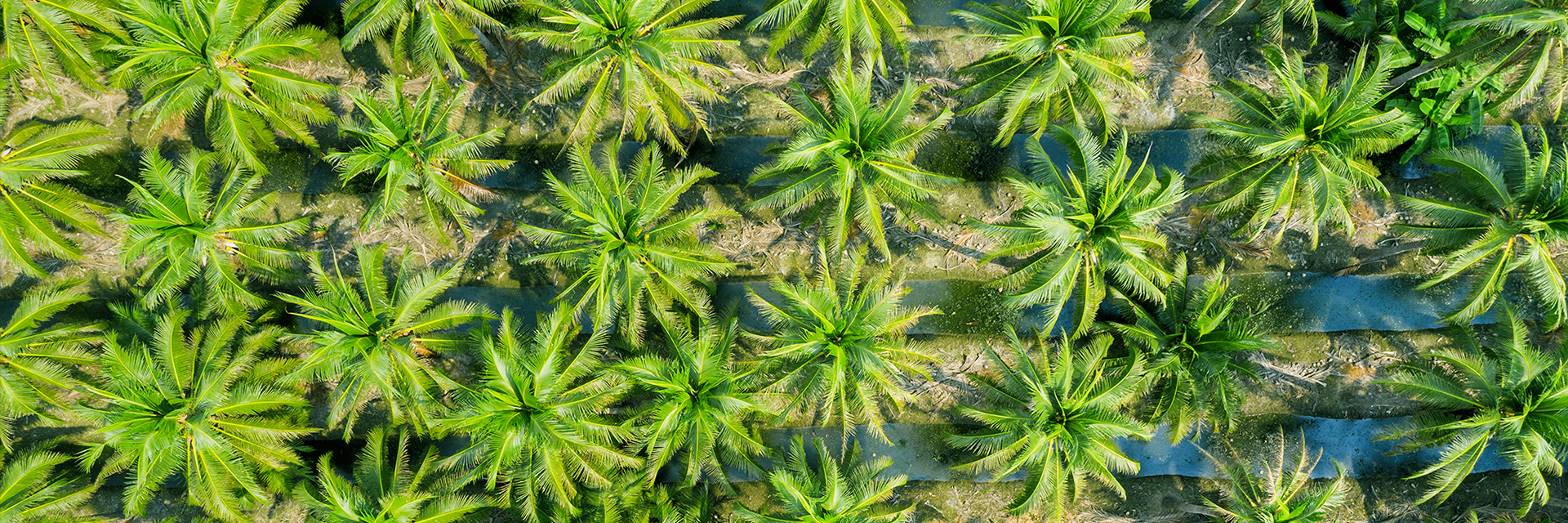
Fresh coconut water prices in Southeast Asia vary from country to country. In Vietnam, a coconut can cost only a few thousand dong, while at tourist destinations in Thailand, Indonesia, or the Philippines, prices may be several times higher. These differences are mainly influenced by coconut supply, transportation costs, and the tourism industry in each country.
Thanks to abundant coconut production and strong consumer demand, fresh coconut water is widely sold across Southeast Asia. However, prices may vary depending on supply, logistics costs, and where the coconuts are sold.
In Vietnam, fresh coconut water is a popular drink and relatively inexpensive due to abundant supply from provinces in the Mekong Delta. As a tropical monsoon country, many provinces also have their own coconut growing areas.
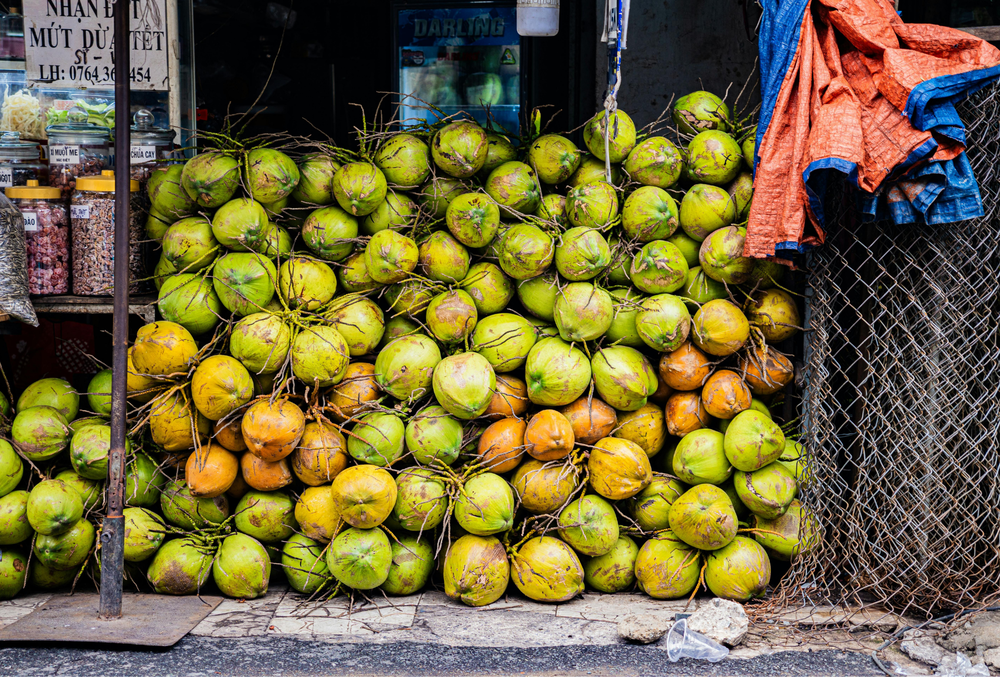
Vietnamese coconuts (Source: Internet)
According to agricultural market data, fresh coconuts are typically sold at around 180,000–210,000 VND per dozen, equivalent to about 15,000–17,500 VND per large coconut and around 8,000–12,000 VND for smaller ones. Thanks to this large supply, Vietnam currently exports coconuts and coconut based products to more than 40 countries and territories, with the United States and China being two of the largest markets.
Thailand is well known for its aromatic pandan coconut variety, also known as Maphrao Nam Hom. This coconut has a distinctive fragrance similar to pandan leaves and a naturally sweet flavor that is popular among tourists.
In major cities and tourist destinations such as Bangkok, fresh coconuts typically sell for around 30–60 baht per fruit (approximately 25,000–48,000 VND). Larger Nam Hom coconuts or those sold in tourist areas can cost around 60–80 baht per fruit (about 48,000–64,000 VND).
Meanwhile, prices may be lower at local coconut farms. According to market data, fresh coconut prices in Bangkok and Chiang Mai have previously ranged from about 1.40 to 2.90 USD per kilogram depending on the season.
Indonesia is the world’s largest coconut producer, and fresh coconut water is widely consumed in daily life, from street vendors to restaurants and tourist areas. Thanks to the abundant supply, coconut water remains relatively affordable in many regions, with street vendors sometimes selling it by the glass for around 5,000 rupiah.

Coconut water at tourist destinations (Source: Internet)
At popular tourist destinations such as Bali, a fresh coconut typically costs around 30,000 rupiah, equivalent to approximately 45,000–50,000 VND. When purchased at restaurants, bars, or resorts, prices can range from 30,000 to 70,000 rupiah per coconut depending on location and service.
According to consumer market surveys, fresh coconut water in the Philippines typically costs around 25–50 pesos per coconut when sold at traditional markets, roadside stalls, or coastal areas. This is a common price range for local consumers.

Coconut water at tourist destinations (Source: Internet)
However, in resorts, restaurants, or major tourist destinations, prices can rise to around 100–200 pesos per coconut due to service costs and tourist demand. Even so, coconut water remains one of the most popular natural beverages in the country.
In Malaysia, coconut and fresh coconut water prices tend to be higher than in some neighboring countries due to unstable domestic supply.
In 2025, Malaysia experienced a coconut shortage as production in several regions dropped by as much as 80–90 percent, leading to a sharp price increase. Fresh coconuts rose to around 3.90 ringgit per fruit, compared to the previous price of about 2.60 ringgit.
|
Country |
Fresh coconut price |
Approx. USD |
Estimated price per coconut (VND) |
|
Vietnam |
~8,000–17,500 VND per coconut |
~0.3–0.7 USD |
~8,000–17,500 VND |
|
Thailand |
30–80 baht per coconut |
~0.85–2.2 USD |
~25,000–64,000 VND |
|
Indonesia |
30,000–70,000 rupiah per coconut |
~1.9–4.4 USD |
~45,000–100,000 VND |
|
Philippines |
25–50 pesos (market), 100–200 pesos (resort) |
~0.45–3.6 USD |
~11,000–90,000 VND |
|
Malaysia |
~3.9 ringgit per coconut |
~0.88 USD |
~21,000 VND |
Although fresh coconut water is a common beverage across Southeast Asia, retail prices vary significantly between countries. These differences are influenced by factors such as coconut supply, production costs, logistics, tourism activity, and the value of specific coconut varieties.
Coconut supply is one of the most important factors determining fresh coconut prices. Countries with large coconut growing areas and high production volumes typically have lower prices due to abundant raw materials.
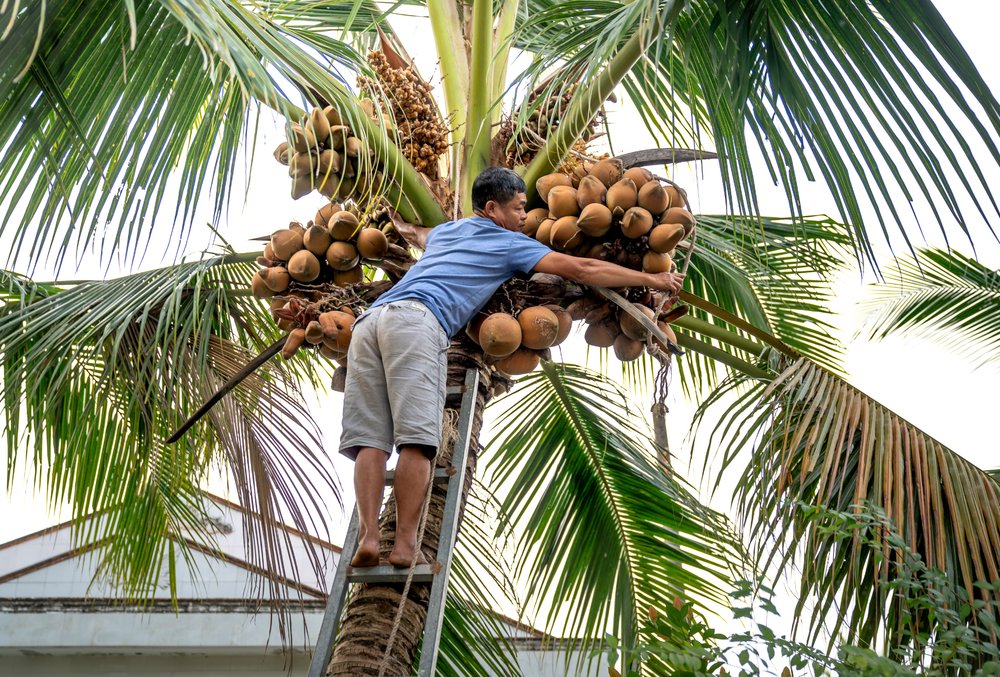
Vietnamese coconuts (Source: Internet)
According to market reports, Vietnam has around 200,000 hectares of coconut plantations, producing roughly 2 million tons annually. Thanks to this stable supply, Vietnam’s coconut industry serves both domestic consumption and exports to more than 40 countries and territories, including the United States and China.
However, coconut prices can still fluctuate. In the Mekong Delta, farm gate coconut prices have reached around 180,000–210,000 VND per dozen, while second grade coconuts range from about 140,000–170,000 VND per dozen. After sorting and transportation costs are added, retail prices can reach around 25,000 VND per coconut.
Other countries such as the Philippines, Indonesia, and Thailand also have large coconut production, but factors such as climate change, pests, or extreme weather can reduce output and push prices higher.
After harvest, coconuts must be transported from farming regions to cities or tourist areas for consumption. This process involves logistics costs such as transportation, storage, sorting, and labor.
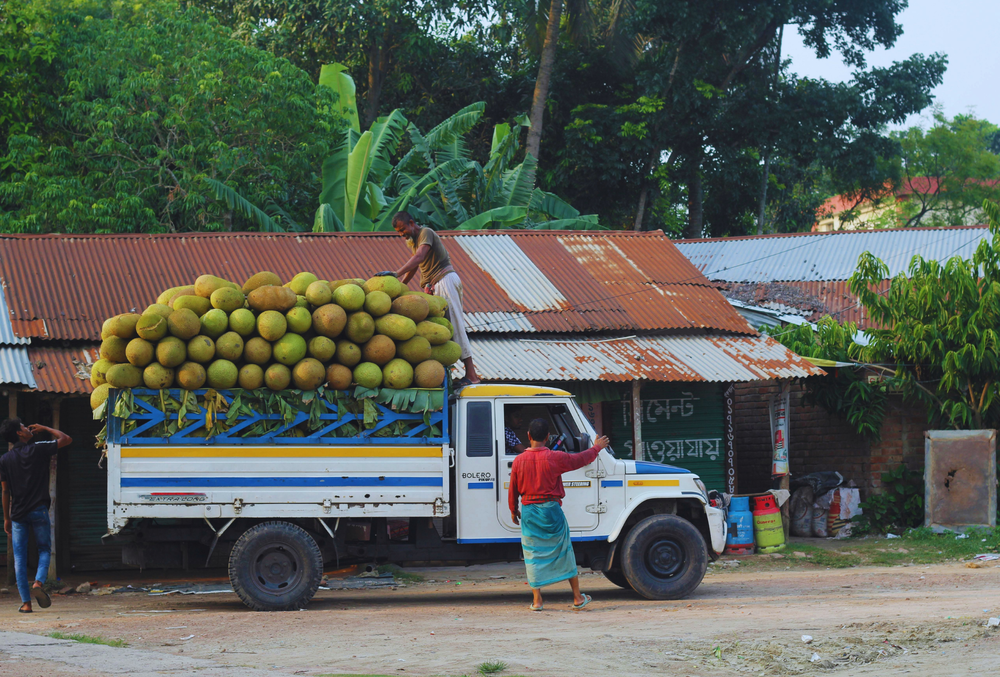
Coconut transportation in Thailand (Source: Internet)
For example, in Vietnam, coconuts are mainly grown in the Mekong Delta and then transported to major cities such as Ho Chi Minh City, Hanoi, or tourist destinations. Once logistics and distribution costs are included, retail prices are typically higher than farm gate prices.
In countries or regions that are not major coconut growing areas, transportation costs can significantly increase retail prices.
Tourism development also plays a major role in determining coconut prices. At popular tourist destinations, coconuts are often sold at higher prices due to service costs and higher demand from visitors.
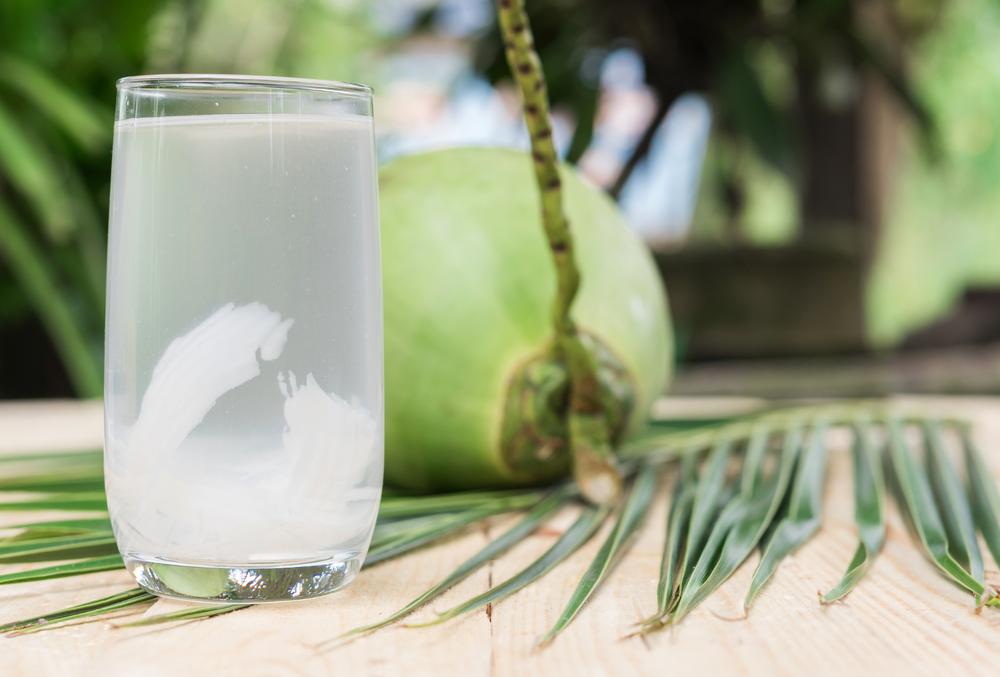
Coconut water (Source: Internet)
For example, in Bangkok, fresh coconuts sold by street vendors typically cost around 30–50 baht per fruit, equivalent to about 25,000–40,000 VND. Specialty coconuts marketed to tourists may sell for 60–80 baht per fruit.
Beyond economic factors, coconut varieties and regional branding can also influence prices. Some coconuts with distinctive flavors or strong tourist appeal often command higher prices than standard varieties.
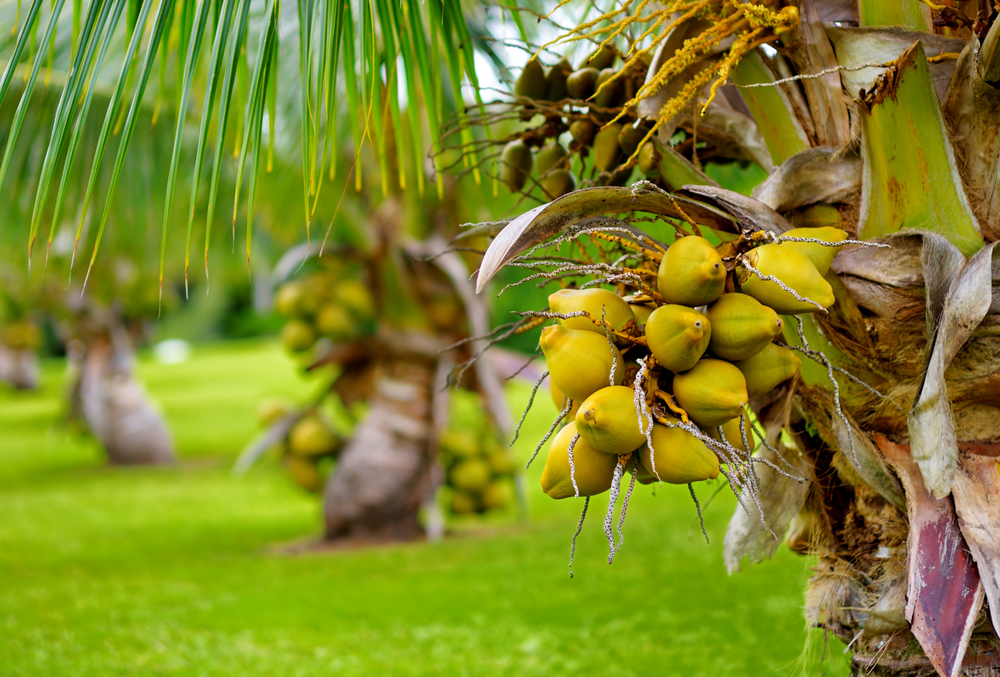
Coconut tree (Source: Internet)
For instance, Thailand’s Nam Hom pandan coconuts are known for their natural fragrance and sweet taste, making them popular among tourists. As a result, these coconuts are often priced higher than ordinary varieties.
In Vietnam, Ben Tre aromatic coconuts are also recognized for their high quality, natural sweetness, and high water content, helping enhance the value of Vietnamese coconut products in international markets.
Southeast Asia lies in the tropical monsoon climate zone, one of the most favorable environments for coconut cultivation. Stable temperatures throughout the year, abundant rainfall, and high humidity create ideal conditions for coconut trees to grow and produce fruit continuously.
Extensive river systems, coastal environments, and fertile alluvial soil further support coconut farming. As a result, many countries in the region have developed large scale coconut plantations, particularly in coastal and delta areas.
Coconuts have long been closely connected to the culture and daily life of people in Southeast Asia. Almost every part of the coconut tree is utilized in traditional lifestyles and cuisine.
Coconut water is often consumed fresh or used in cooking, while coconut milk provides richness for curries, desserts, and traditional sweets. Grated coconut is used in many local pastries, and coconut oil is commonly used in both cooking and personal care products.
Even coconut shells and husks are reused to make household items or handicrafts, highlighting the versatility of the coconut tree.
Thanks to favorable natural conditions, Southeast Asia is one of the world’s largest coconut producing regions.
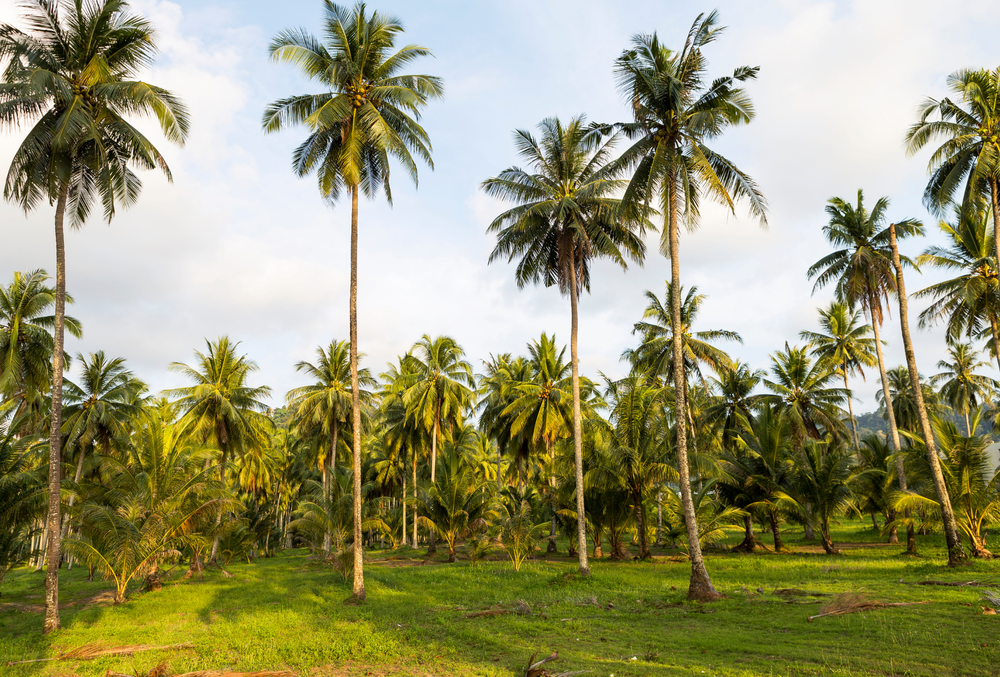
Coconut garden (Source: Internet)
Indonesia currently ranks first globally with about 17.13 million tons of coconuts annually, according to WordAtlas. Coconut farming is widespread across the archipelago, with North Sulawesi being one of the key production areas.
The Philippines ranks second with about 14.77 million tons per year. The coconut industry plays a major role in the country’s agricultural economy, with major growing regions including Luzon, Southern Mindanao, and Eastern Visayas.
In Vietnam, coconuts are widely cultivated in coastal provinces and the Mekong Delta, especially in Ben Tre, often referred to as the country’s “coconut capital.” With an annual production of around 1.68 million tons according to WordAtlas, Vietnam ranks sixth among the world’s top coconut producing countries.
Thailand also ranks among the top coconut producers globally, with annual production of around 0.81 million tons. Combined with the country’s strong tourism and food industries, Thai coconuts are becoming increasingly well known in international markets.
Vietnam is considered one of the countries with strong advantages in the coconut industry within Southeast Asia. Favorable climate conditions, large cultivation areas, and a growing processing industry have helped Vietnamese coconut products expand both domestically and internationally.
Vietnam’s coconut production is concentrated mainly in the Mekong Delta. Ben Tre, often referred to as the country’s coconut capital, has large cultivation areas and stable production.
This abundant raw material supply ensures consistent product quality and large scale availability for both domestic consumption and export markets.
Beyond fresh coconut consumption, Vietnam’s coconut industry has also expanded into processed products to meet modern market demands. Packaged coconut water in bottles, cans, or cartons has become increasingly popular due to convenience and longer shelf life.
Many Vietnamese companies have invested in processing and packaging technologies to bring coconut products to international markets. COMOON Co., Ltd. is one example of a company developing various coconut based products for export.
Packaged coconut water helps preserve the natural sweetness of coconuts while making transportation, storage, and distribution easier through modern retail channels and e-commerce platforms.
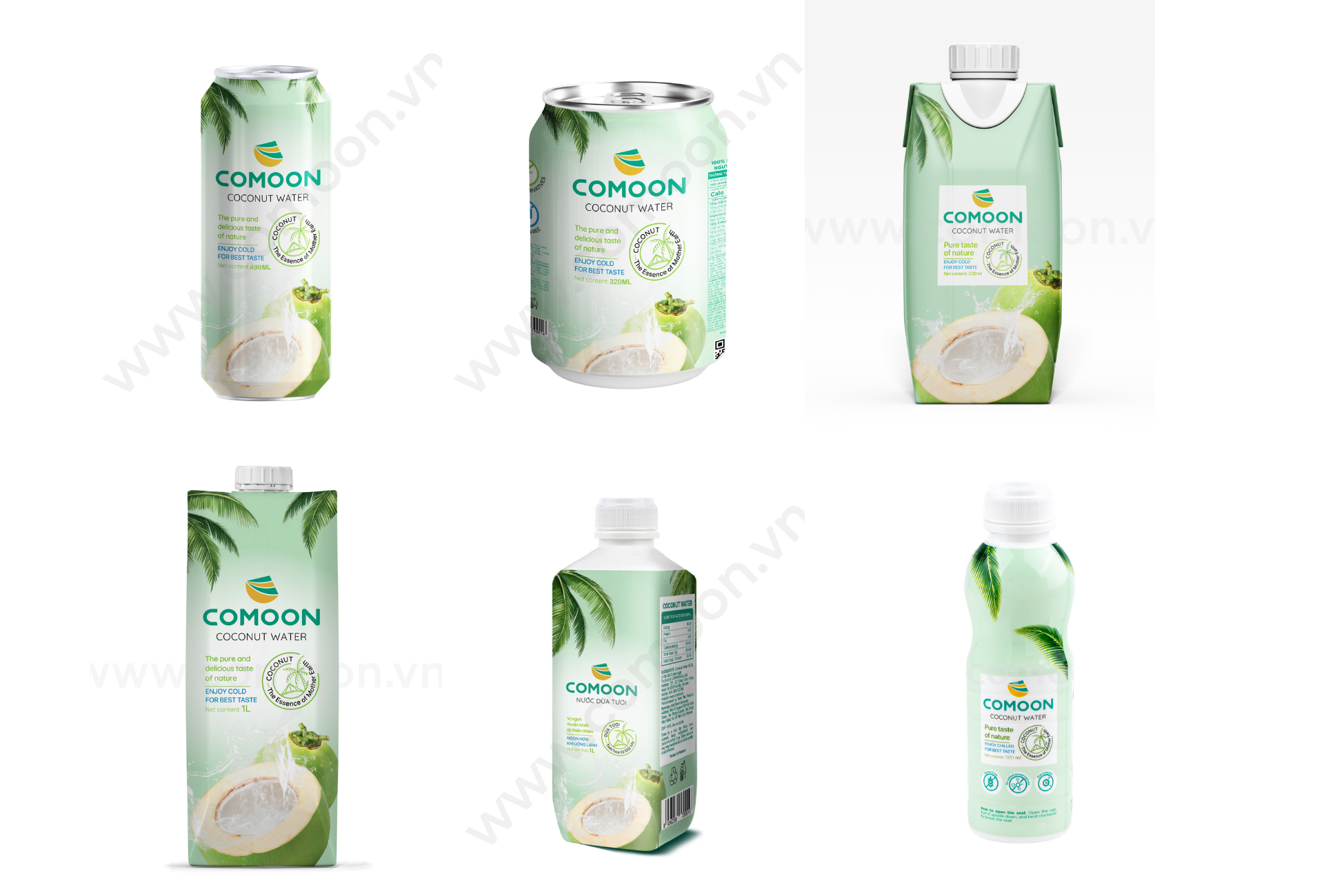
COMOON coconut products
Southeast Asia is one of the world’s richest regions in coconut supply thanks to its tropical climate and large cultivation areas. Countries such as Indonesia, the Philippines, Thailand, and Vietnam all play significant roles in the global coconut market.
However, fresh coconut water prices vary across countries due to differences in supply, logistics costs, sales locations, and tourism development. Within the region, Vietnam remains one of the most affordable places to access fresh coconut water thanks to the abundant supply from the Mekong Delta. This advantage also creates opportunities for Vietnam to further develop coconut based products and expand its market in the future.


58 Co Giang Street, Cau Ong Lanh Ward, District 1, Ho Chi Minh City, Vietnam
T: (+84) 366 053 666