




- Login
- Register


News
The latest updates from COMOON. Stay tuned to not miss any information!
FROZEN COCONUT WATER: CHARACTERISTICS, STANDARDS, AND APPLICATIONS
Friday, 14/08/2026, 11:23
Frozen coconut water is a raw material chosen by many beverage and food processing manufacturers to replace fresh coconut water. What are the technical specifications of this product? What are its technical standards and applications? Let’s explore the details with COMOON in the article below.
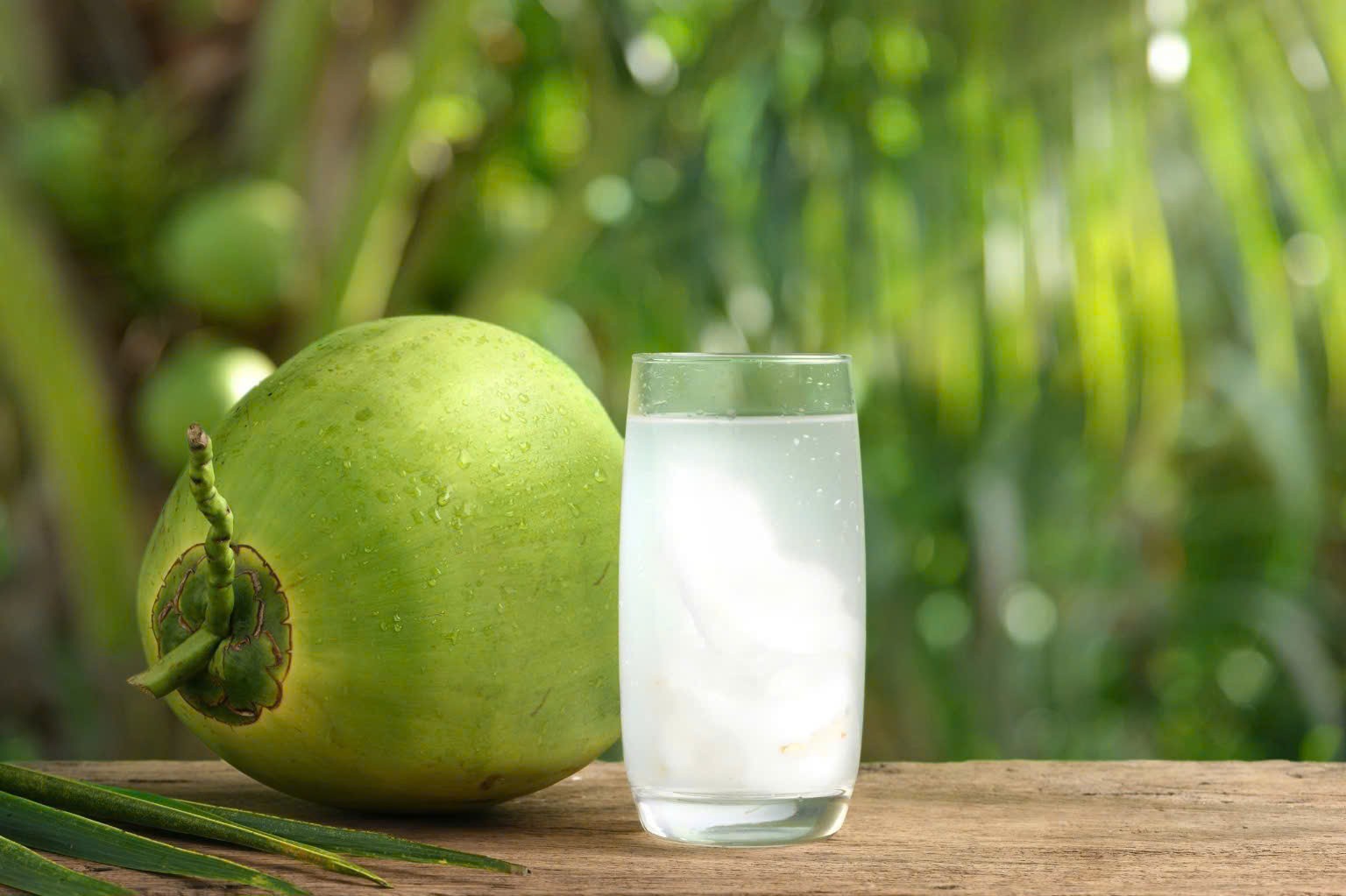
Frozen coconut water is an industrial raw material that retains the natural properties of coconut water
What is frozen coconut water?
Frozen coconut water (or flash-frozen coconut water) is fresh coconut water extracted directly from whole coconuts. After filtering and processing, the coconut water is quickly frozen at low temperatures. The freezing process helps preserve its naturally sweet flavor and nutrition.
Frozen coconut water is different from frozen coconut milk. Coconut water is the clear liquid inside the coconut cavity with a very low fat content. Coconut milk is extracted from coconut meat, appearing milky white with a high fat content (usually over 28%). The two products serve different purposes.
Frozen coconut water is an industrial product mainly used in beverage manufacturing, food processing, and F&B beverage preparation.
How is frozen coconut water different from frozen concentrated coconut water?
Both frozen coconut water and frozen concentrated coconut water are made from fresh coconut water, but their processing methods and uses differ significantly. The table below summarizes the key differences between the two product types:
| Criteria | Frozen Coconut Water | Frozen Concentrated Coconut Water |
| Nature | Pure, direct use | Heat-concentrated, requires reconstitution |
| Color | Transparent | Characteristic yellow |
| Packaging Specification | 5 kg/bag – 20 kg/carton | 250–265 kg/drum |
| Storage Temperature | -18°C | -20°C |
| Main Advantage | Retains fresh original flavor | Optimizes shipping costs and large-volume storage |
Frozen coconut water is more suitable when the finished product needs to maintain a fresh, original taste, such as in bottled coconut water production or on-site beverage preparation. Concentrated coconut water is suitable for large-volume imports to optimize sea freight costs. Concentrated products need to be reconstituted (diluted) before use.
The choice between the two depends on production scale and finished product flavor requirements.
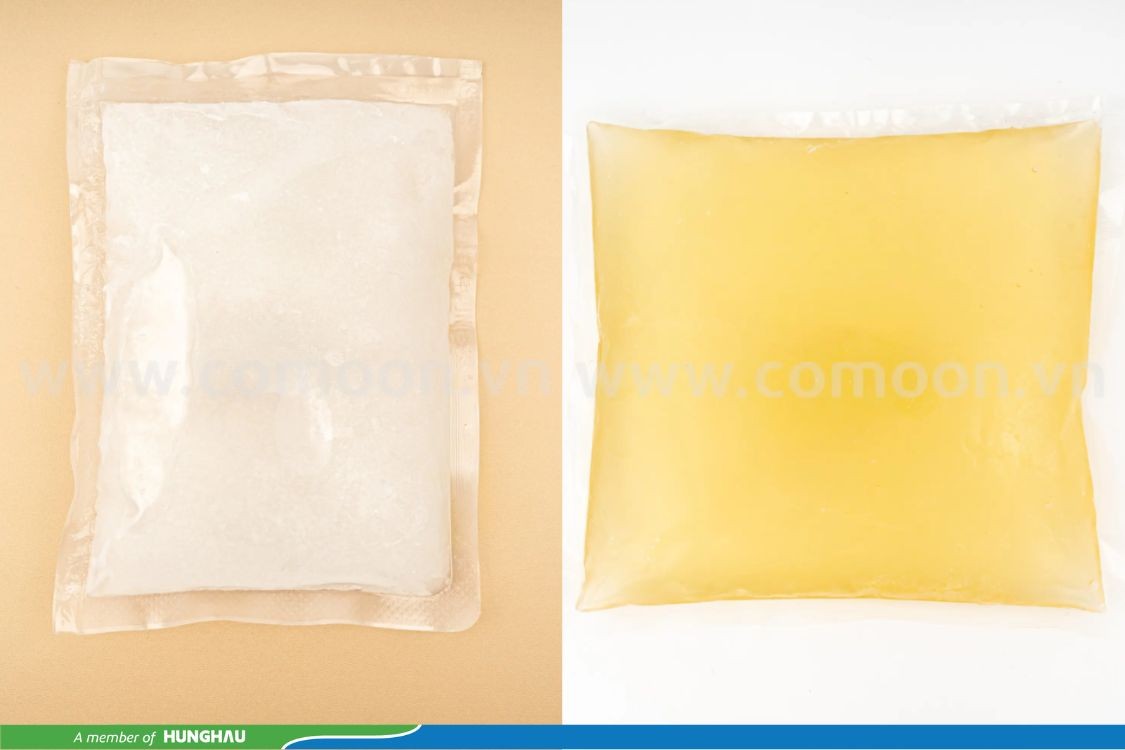
Comparing COMOON frozen coconut water (transparent) and COMOON frozen concentrated coconut water (yellow)
Outstanding features of frozen coconut water:
Frozen coconut water is made from 100% natural coconut water without added additives. The product is a transparent liquid, maintaining the signature sweet taste of fresh coconut water.
Popular coconut varieties for frozen coconut water production
Frozen coconut water can be produced from various coconut varieties. In Ben Tre and the Mekong Delta region, the three most popular variety groups are Tall Coconut (Dua Ta), Strawberry Coconut (Dua Dau), and Siame Coconut (Dua Xiem). Each variety has unique characteristics regarding water volume, sweetness, and coconut meat.
Tall Coconut belongs to the tall coconut group and is the traditional variety occupying the largest area in Ben Tre. Large fruit, thick meat (10-12mm), high oil content (63-65%). Its water is less sweet than Siame coconut, but fruit yield is stable and trees have a long lifespan. Tall Coconut is the main raw material for industrial coconut processing.
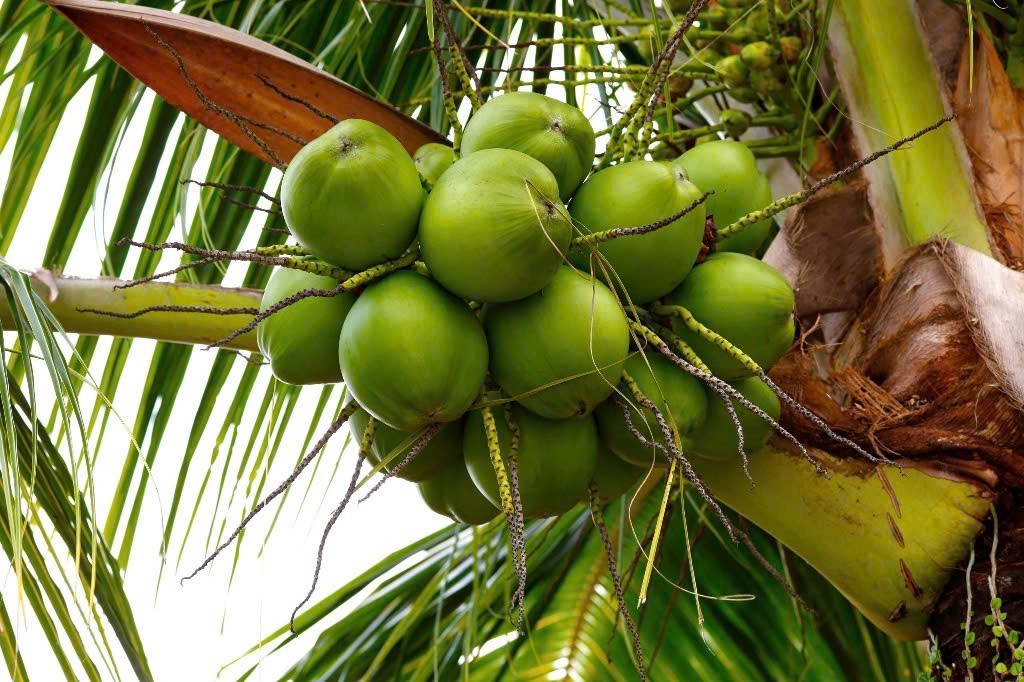
Tall Coconut is the variety with the largest area in Ben Tre, serving as the main raw material for industrial frozen coconut water production.
Dwarf coconut also belongs to the tall coconut group and is the second most common variety after Tall Coconut. Round fruit, abundant and stable water supply. Strawberry Coconut is suitable for large-scale cultivation and industrial processing.
Siame Coconut belongs to the dwarf coconut group, including varieties like Green Siame and Dwarf Siame. High water yield with a naturally sweet taste and sugar content of around 7–7.5%. This variety bears fruit early.
The choice of coconut variety depends on the manufacturer's intended use. Each variety provides water with distinct sweetness and flavor profiles.
Coconut water Brix standard
Brix degree measures total dissolved solids and reflects the natural sweetness of coconut water. Codex Alimentarius standards require coconut water to reach a minimum of 5.0° Brix. For frozen coconut water, the Brix index is a crucial parameter for evaluating raw material quality. The higher the Brix, the sweeter the coconut water, resulting in a richer flavor after thawing.
Brix degree varies by coconut variety and harvest time. Coconuts harvested between months 6 and 8 usually yield water with the highest Brix levels. When importing frozen coconut water, partners often require suppliers to guarantee a minimum Brix index in the Certificate of Analysis to ensure uniform quality across batches.
Blast Freezing technology
COMOON frozen coconut water is frozen using Blast Freezing technology (forced air freezing). This technology drops the product temperature to freezing levels in a short time, limiting microorganism growth and minimizing flavor changes.
Compared to slow freezing (placing in standard cold storage), Blast Freezing forms smaller ice crystals, preserving cell structure better. Thawed coconut water tastes close to freshly extracted coconut water.
Frozen coconut water technical specifications
| Item | Information |
| State | Liquid, frozen |
| Color | Characteristic transparent |
| Freezing Technology | Blast Freezing |
| Storage Temperature | -18°C |
| Packaging | 5 kg/PA bag, 20 kg/carton (or upon request) |
| Shelf Life | 12 months |
| Season | Year-round |
Frozen coconut water production process
Frozen coconut water is produced through 6 main steps in a closed-loop process:
Harvesting fresh coconuts: Coconuts are harvested from the Ben Tre material region, selecting fruit at the right maturity stage for optimal sweetness and nutritional content.
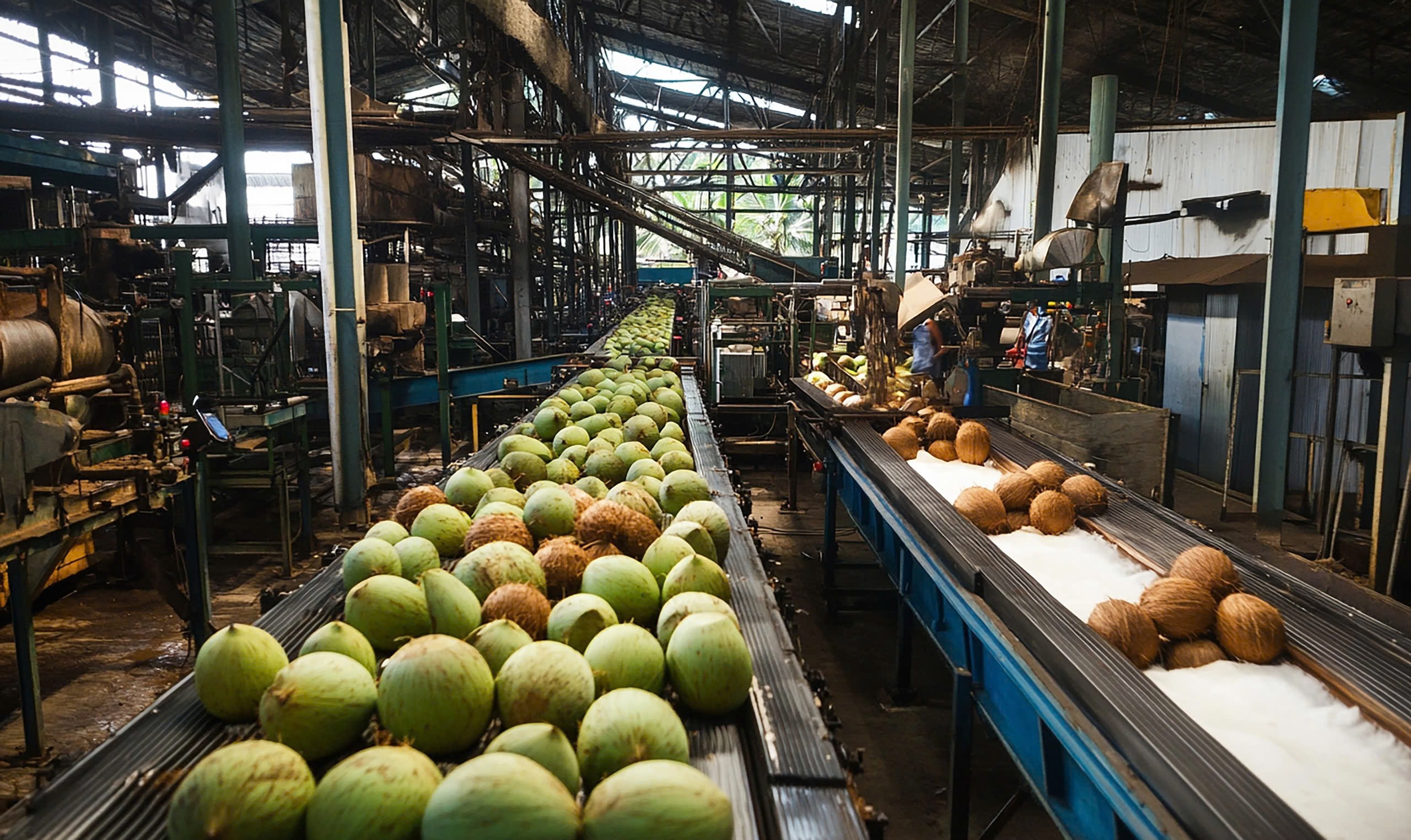
Fresh coconuts are harvested at the right age and processed in a closed system
Coconut water extraction: Coconuts are husked, split, and the inner liquid is extracted. This operation is performed under strict hygienic control.
Filtration and treatment: Raw coconut water is filtered to remove impurities, coconut fibers, and small shell fragments. The product undergoes heat treatment to ensure microbiological safety.
Quick freezing: Processed coconut water is quick-frozen using Blast Freezing technology. Fast freezing speed shortens phase transition time, preserving fresh taste.
Packaging: The product is packed into PA bags or cartons per required specifications under strict hygiene conditions.
Storage: Finished products are stored in cold storage at -18°C until shipment.
The entire process takes place in a facility certified with BRCGS, FSSC 22000, and HALAL standards.
Nutritional composition of frozen coconut water
Frozen coconut water retains most of the nutritional content of fresh coconut water thanks to the quick freezing process. The table below summarizes reference nutritional values per 100g of coconut water (based on USDA database):
| Nutrient | Content / 100 g |
| Energy | 19 kcal |
| Carbohydrates | 3.7 g |
| Protein | 0.72 g |
| Fat | 0.2 g |
| Potassium | 250 mg |
| Sodium | 105 mg |
| Magnesium | 25 mg |
| Calcium | 24 mg |
| Phosphorus | 20 mg |
| Vitamin C | 2.4 mg |
(Source: USDA FoodData Central - Nuts, coconut water (liquid from coconuts), NDB No: 12119)
Coconut water stands out for its high potassium content (250mg/100g) and low energy value (19 kcal/100g). Fat content is nearly zero, making it suitable for clean label beverage lines and sports drinks needing natural electrolyte replenishment.
Carbohydrates in coconut water consist mainly of natural sugars (glucose and fructose) that are easily absorbed. Vitamin and mineral content may vary depending on coconut variety, harvest age, and growing region.
Applications of frozen coconut water in manufacturing and processing
Bottled coconut water and beverage production
Frozen coconut water serves as raw input for bottled coconut water and beverage processing lines. It is also used in electrolyte-replenishing drinks and functional beverages. After thawing, the liquid can go straight into mixing or filling stages without needing pressing or filtering.
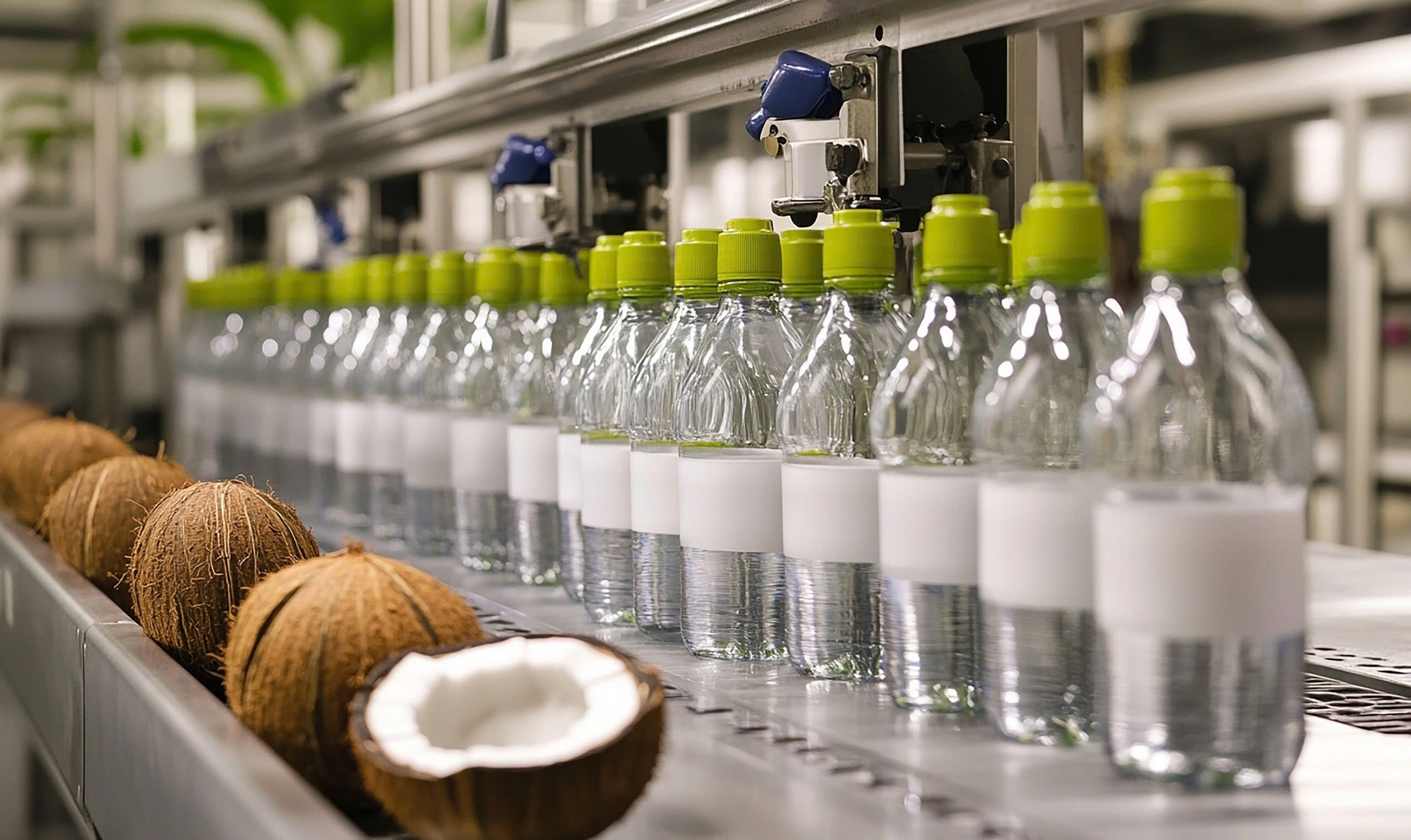
Main advantages over fresh coconut water: stable year-round supply, uniform batch quality, and easy dosage control on processing lines. Factories do not need to worry about seasonal or weather-driven quality variations.
F&B beverage preparation
Frozen coconut water is suitable for restaurants, coffee shops, smoothie bars, and tea brands. Once thawed, it acts as a base for blended ice drinks, smoothies, or mocktails. Bars also use frozen coconut water for mixed cocktails and fruit drink blends.
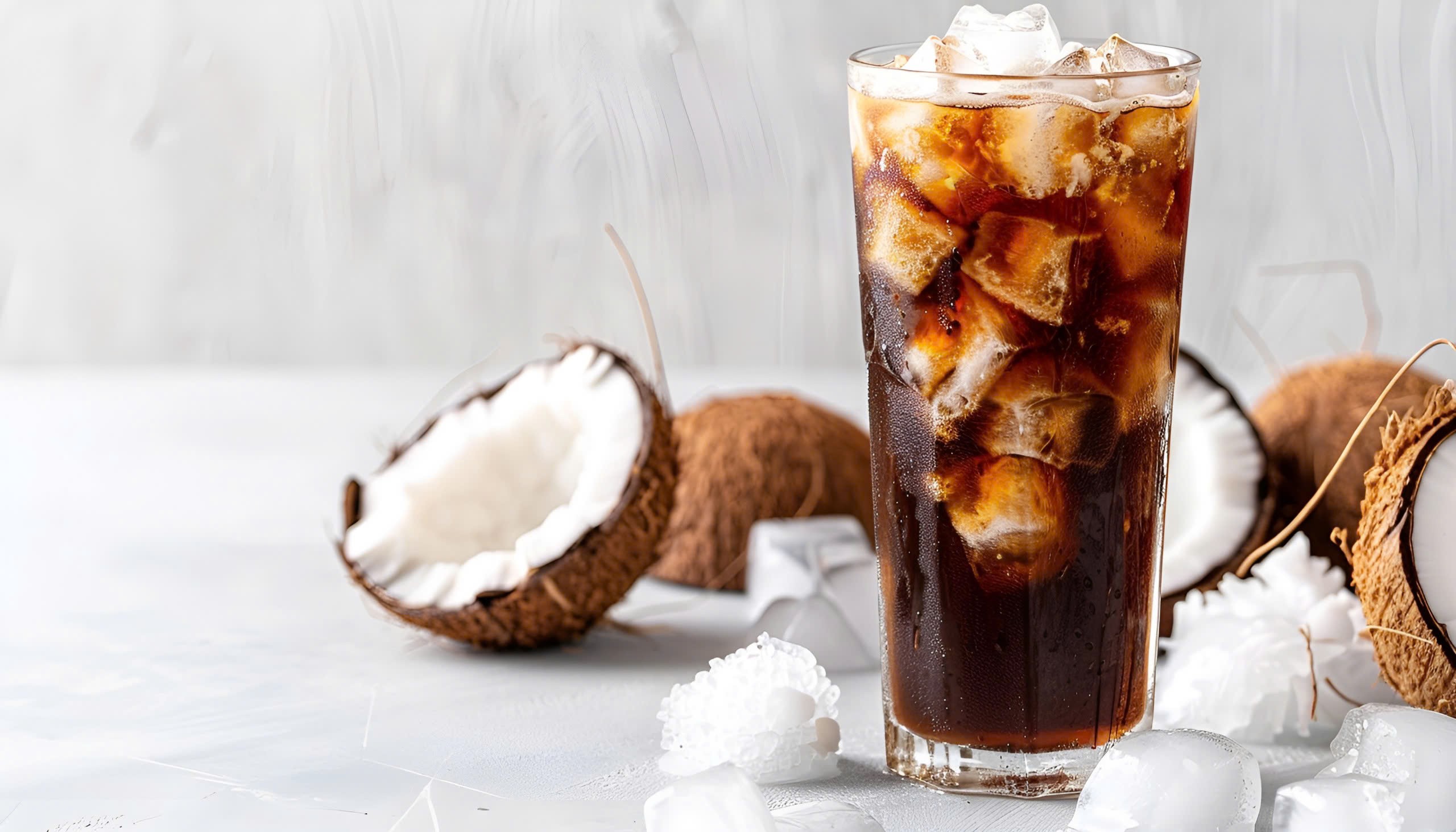 Frozen coconut water can be used as a preparation base for blended ice, smoothies, and mocktails at restaurants and coffee shops.
Compared to opening fresh coconuts at the bar, frozen coconut water saves labor, keeps drink flavor consistent across servings, and extends raw material shelf life. Preparation counters only need to thaw the exact amount required for the day.
Food processing and desserts
Frozen coconut water is used in manufacturing coconut jelly (liquid base), ice cream, and sorbet. It provides a natural flavor base for dessert products. Plant-based product lines are particularly well-suited for coconut water inputs.
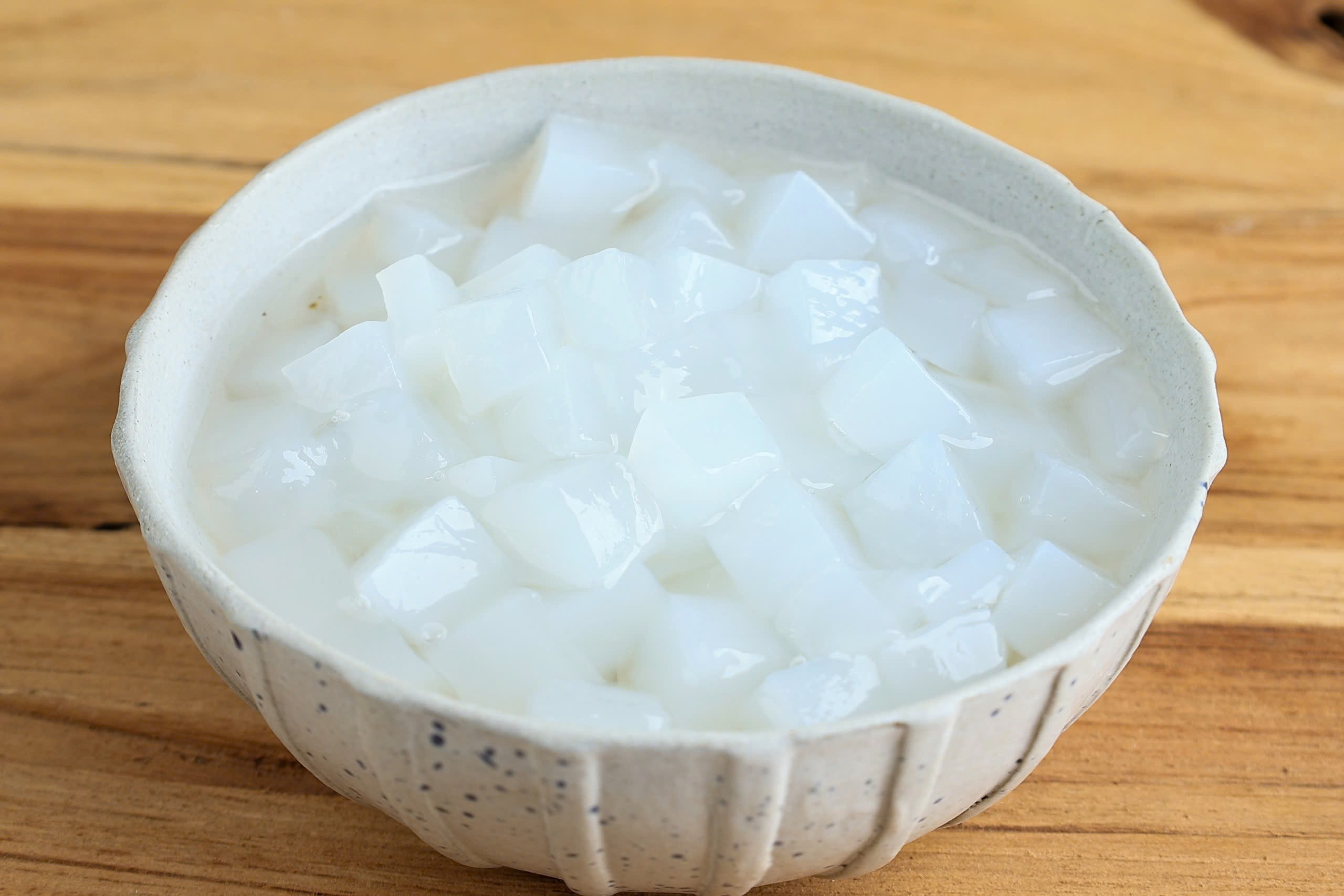 Coconut water is the primary fermentation medium in industrial coconut jelly (nata de coco) production.
Coconut water serves as the culture medium for Acetobacter xylinum bacteria during coconut jelly production. The quality of coconut water directly affects the thickness and chewiness of the final jelly product. Frozen coconut water retains adequate sugar and mineral content necessary for fermentation.
Exports and OEM manufacturing
COMOON frozen coconut water meets export requirements for international partners and food processing plants. Private label brands also use this product as an OEM raw material. The product features clear traceability and holds BRCGS, FSSC 22000, FDA, and HALAL certifications.
Flexible packaging options upon request: from 5 kg PA bags for small orders to 20 kg cartons for industrial volumes. COMOON is ready to provide sample batches alongside detailed technical spec sheets for customer evaluation before ordering.
How to store frozen coconut water
Frozen coconut water must be kept continuously at -18°C. Shelf life is 12 months from the production date, provided cold storage temperature remains stable.
After thawing, coconut water should be used within the day. Do not refreeze thawed product, as flavor quality and microbiological safety will deteriorate.
Transport products in reefer containers via sea or air freight. Container temperature must be maintained at -18°C throughout transit.
Where to buy frozen coconut water?
COMOON is a member unit of HungHau Foods Joint Stock Company (HungHau Foods), specializing in supplying Ben Tre coconut products for domestic and export markets.
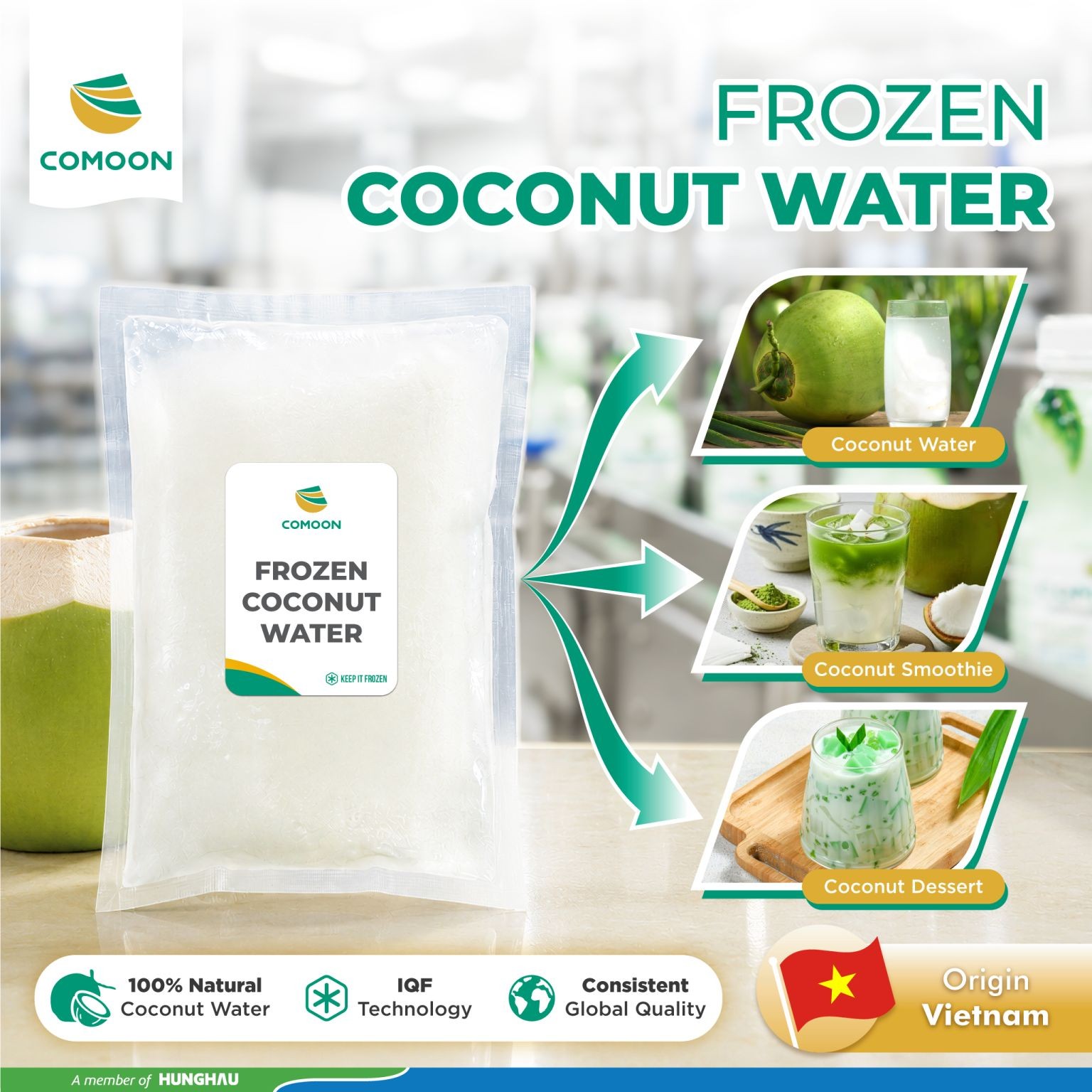 COMOON frozen coconut water meets BRCGS, FSSC 22000, FDA, and HALAL standards
COMOON frozen coconut water is produced from 100% natural coconut water and flash-frozen using Blast Freezing technology. Standard packaging includes 5kg/PA bag or 20kg/carton. The product complies with BRCGS, FSSC 22000, FDA, and HALAL standards, suitable for export and industrial raw material supply.
Why choose frozen coconut water from COMOON?
COMOON owns coconut material areas in Ben Tre, shortening the supply chain and reducing intermediary costs. Product pricing is competitive compared to regional suppliers.
Stable raw material supply with large capacity. Ben Tre coconuts offer consistent water quality thanks to distinctive alluvial soil conditions. Supply capacity reaches 500 tons of finished products per year, satisfying industrial-scale orders.
Products and processing plants are certified with BRCGS, FSSC 22000, FDA, and HALAL. Certification files are readily available for partner verification.
COMOON packages according to customer specifications and provides product samples along with detailed technical specification sheets.
Frequently Asked Questions (FAQ)
-
Is frozen coconut water different from fresh coconut water? Both frozen and fresh coconut water come from the inside of whole coconuts. The difference lies in preservation: fresh coconut water must be consumed within a few days, whereas frozen coconut water lasts up to 12 months at -18°C while maintaining nearly equivalent flavor.
-
What is the shelf life of frozen coconut water? The shelf life is 12 months from the date of production, provided it is continuously stored at -18°C. Cold storage temperatures must remain stable to avoid fluctuations that affect product quality.
-
How long can frozen coconut water be used after thawing? After thawing, coconut water should be used within the day to maintain flavor and ensure hygiene safety. Thawed products should not be refrozen.
-
How does COMOON package frozen coconut water? Standard packaging is 5kg/PA bag or 20kg/carton. COMOON also accepts custom packaging requests for OEM orders.
-
Which industries are suitable for frozen coconut water? The product is suitable for beverage manufacturing, F&B drink preparation, and the production of coconut jelly, ice cream, and sorbet. OEM partners manufacturing bottled coconut water or electrolyte drinks also use frozen coconut water as a primary input.
Frozen coconut water preserves natural fresh taste with a stable year-round supply. Meeting international quality standards, the product is ideal for both industrial manufacturing and F&B beverage preparation. COMOON has provided useful information regarding the technical characteristics, standards, and applications of frozen coconut water. We hope this article helps you better understand the product and choose the right raw material source for your production needs.
Contact Information:
COMOON Co., Ltd.
Phone: +84 366 053 666
Email: info@comoon.vn
Website: comoon.vn
References:
-
Coconut water nutritional composition - USDA FoodData Central, NDB No: 12119
-
Coconut water standard Codex Alimentarius - Codex Standard for Coconut Water, Minimum Brix 5.0%
-
Characteristics of Ben Tre Green Siame coconut variety - Ministry of Industry and Trade of Vietnam
-
Coconut water composition analysis by variety and harvest age - Journal of Agriculture and Food Research, ScienceDirect
Share :
Customer comments
Other news
COMOON Co., Ltd.
58 Co Giang Street, Cau Ong Lanh Ward, District 1, Ho Chi Minh City, Vietnam
T: (+84) 366 053 666
- Business Registration No.: 0318171053
- Issued on November 17, 2023 by the Department of Planning and Investment of Ho Chi Minh City.

Copyright © 2024 COMOON


