




- Login
- Register


News
The latest updates from COMOON. Stay tuned to not miss any information!
WHAT IS COCONUT FLOUR USED FOR? WHY CHOOSE VIETNAMESE COCONUT FLOUR AS A RAW MATERIAL FOR BAKERY PRODUCTION?
Thursday, 09/04/2026, 08:43
Coconut flour is attracting increasing attention from bakery manufacturers. With its high fiber content and versatile applications, coconut flour is no longer a niche ingredient but has become a strategic component in modern bakery formulations.
Vietnam is emerging as a region with strong advantages in supplying stable coconut flour for bakery manufacturers worldwide.
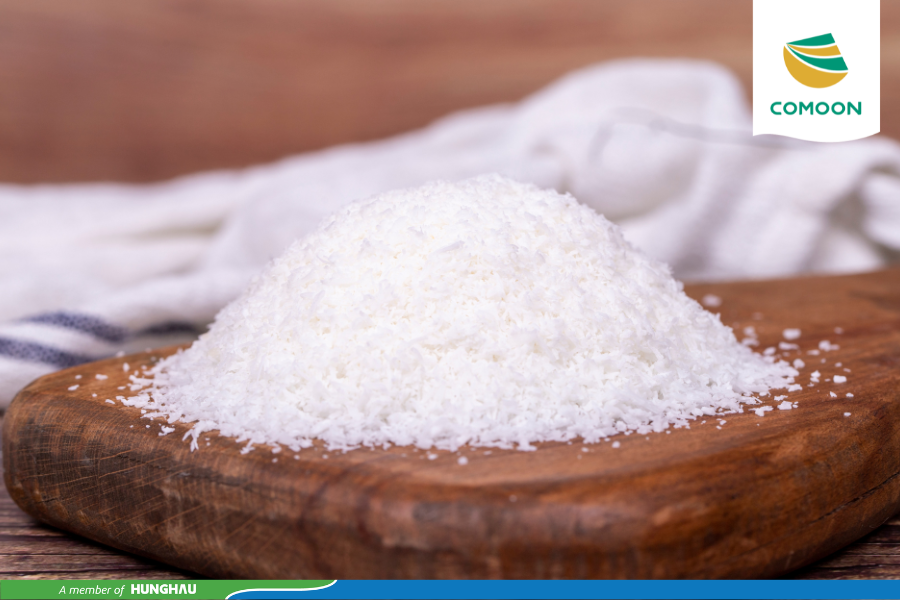
What is coconut flour?
Coconut flour is a dry ingredient made from defatted coconut meat, which is the remaining part after coconut milk or coconut oil extraction. The remaining coconut solids are dried and finely ground into flour.
The main characteristics of coconut flour include:
- High fiber content, typically ranging from 35–45%
- Low fat content due to the oil extraction process
- Fine texture, suitable for blending with other flours
- Gluten-free
Because of these characteristics, coconut flour is widely used in functional food production, especially in bakery products targeting health-conscious consumers.
According to USDA FoodData Central, coconut flour provides significantly higher dietary fiber than traditional wheat flour, thereby supporting digestive health and helping deliver more stable energy release.
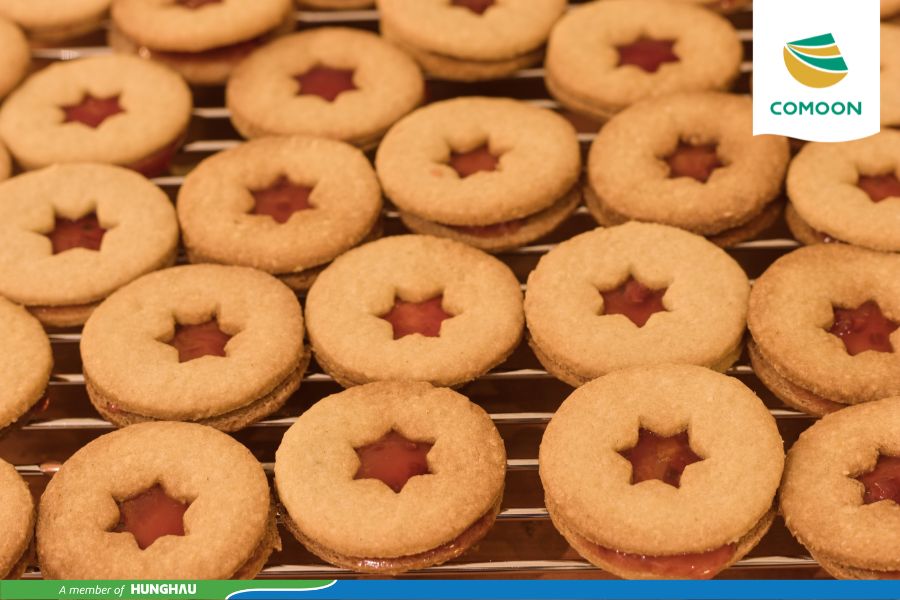
How is coconut flour applied in industrial bakery production?
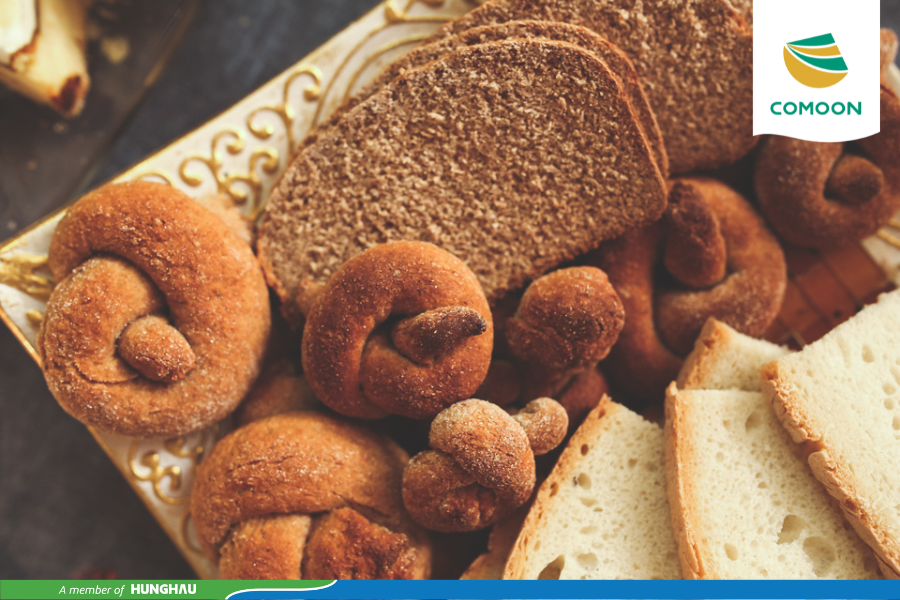
In industrial bakery production, coconut flour is not used to completely replace wheat flour, but rather as a functional ingredient to improve both nutritional value and product performance. This ingredient is commonly incorporated into formulations for biscuits, cookies, cakes, muffins, gluten-free bakery products, as well as industrial premix lines.
Thanks to its naturally high fiber content, coconut flour helps increase the nutritional value of finished products while also contributing to better moisture retention due to its strong liquid absorption capacity. This characteristic allows baked products to maintain softness and improve stability during storage, which is especially important in large-scale production.
In addition, coconut flour also plays a role in texture adjustment, creating a lighter and softer crumb structure when properly balanced with other ingredients. This makes it suitable for developing new product lines that respond to changing consumer trends. In recent years, the market has seen a clear shift toward bakery products that are less sweet, more natural, and more aligned with healthy lifestyles.
Coconut flour supports this trend by enabling lower-sugar formulations while still maintaining acceptable taste and texture. This makes it an ideal ingredient for manufacturers that want to develop “better-for-you” bakery lines without compromising product quality or consumer acceptance.
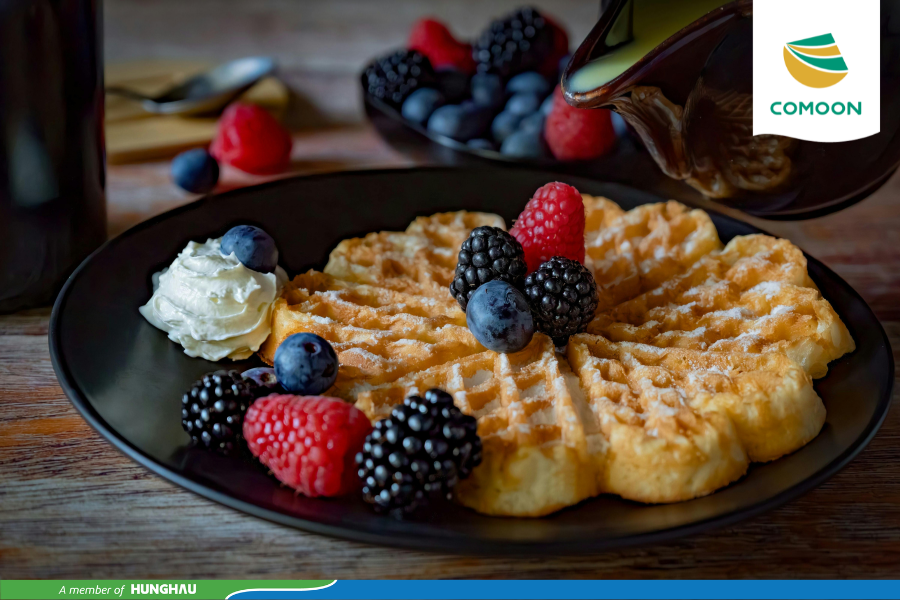
Coconut flour compared with other flours in bakery production
| Criteria | Coconut flour | Wheat flour | Almond flour |
| Gluten | Gluten-free | Contains gluten | Gluten-free |
| Fiber content | 35–40% | 2–3% | 10–12% |
| Fat content | Low (≤15%) | Low | High (~50%) |
| Water absorption | Very high (3–4 times its weight) | Medium | Low |
| Usage level in bakery | 5–25% | Base flour | Partial substitute |
| Shelf stability | High | High | Lower (oxidation risk) |
| Cost efficiency | Competitive | Stable | High cost |

Why choose coconut flour from Vietnam for bakery production?
Vietnam is considered a reliable sourcing destination for coconut flour used in industrial bakery production, thanks to the combination of abundant raw materials, favorable natural conditions, and competitive production capacity. Each year, Vietnam produces around 2 million tons of coconuts, ensuring a stable and long-term supply for manufacturing demand.
The tropical climate of the Mekong Delta helps maintain consistent coconut quality throughout the year. This is an essential factor in maintaining uniformity in large-scale production.
In addition to raw material advantages, Vietnam also offers more competitive pricing than other coconut-producing countries such as the Philippines and Sri Lanka, while still meeting export quality standards.
Vietnam’s coconut processing facilities are also becoming increasingly modernized, allowing better control of moisture, particle size, and overall product consistency.
As a result, coconut flour from Vietnam is highly suitable for bakery manufacturers, ingredient importers, and OEM partners that require a supply chain that is both reliable and scalable.
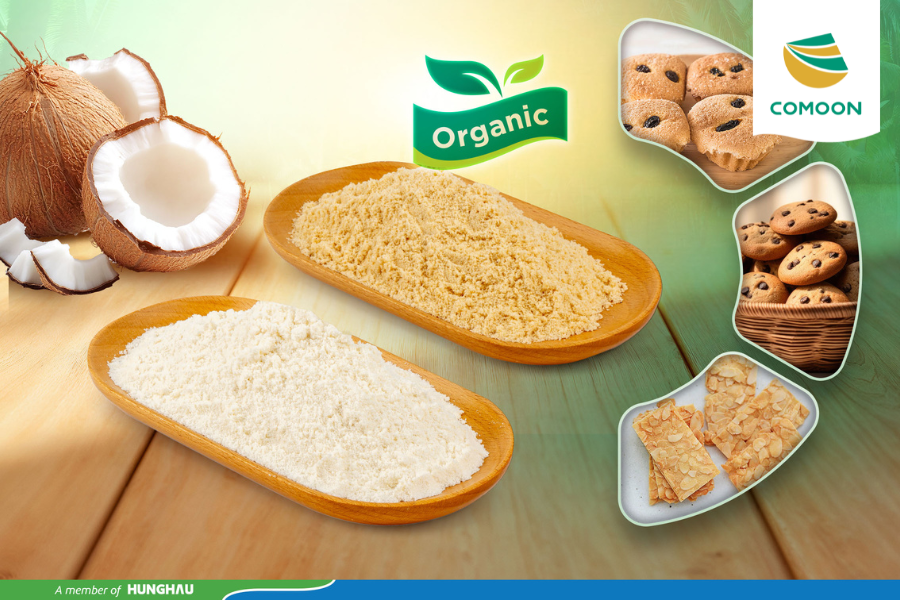
COMOON coconut flour
COMOON Co., Ltd., a member of HungHau Foods, supplies coconut flour sourced from Ben Tre, Vietnam’s key coconut-growing region.
COMOON coconut flour is produced from 100% defatted coconut meat, ensuring stable quality and suitability for industrial use. The product is currently available in both standard and organic variants, meeting different market requirements.
Product specifications:
- Moisture is controlled at or below 8%
- Low fat content, suitable for bakery formulations
- Shelf life of up to 12 months
- Packed in 25 kg bags, customizable upon request
Coconut flour from COMOON Co., Ltd. helps bakery manufacturers, importers, and industrial partners develop bakery products in line with modern consumer trends.

Conclusion
Coconut flour is becoming an increasingly important ingredient in modern bakery production thanks to its nutritional benefits and high versatility. As demand for high-fiber and gluten-free products continues to grow, bakery manufacturers are increasingly incorporating coconut flour into their formulations.
Vietnam has a clear advantage in supplying coconut flour, thanks to the combination of stable raw materials, competitive pricing, and industrial-scale production capacity. Suppliers like COMOON are proud to offer quality coconut-based products that meet the raw material needs of bakery production worldwide.
Contact information:
COMOON Co., Ltd.
Phone: +84 366 053 666
Email: info@comoon.vn
Share :
Customer comments
Other news
COMOON Co., Ltd.
58 Co Giang Street, Cau Ong Lanh Ward, District 1, Ho Chi Minh City, Vietnam
T: (+84) 366 053 666
- Business Registration No.: 0318171053
- Issued on November 17, 2023 by the Department of Planning and Investment of Ho Chi Minh City.

Copyright © 2024 COMOON


