




- Login
- Register


News
The latest updates from COMOON. Stay tuned to not miss any information!
WHAT IS DESICCATED COCONUT? CLASSIFICATION OF DESICCATED COCONUT
Sunday, 15/02/2026, 12:41
When people think about coconuts, they often immediately think of the refreshing and nutritious coconut water. However, besides the well-known coconut water, coconut meat is also a part that brings significant nutritional value and applications, especially when processed into desiccated coconut.
In this article, COMOON will help you understand what desiccated coconut is, how it is classified, its production process, and its practical applications in the food industry as well as in daily life, along with the export activities related to desiccated coconut.
What is desiccated coconut?
Desiccated coconut, also known as dried grated coconut, is produced from natural coconut meat, which is the white flesh (also called coconut kernel) inside the coconut. The brown skin is removed, and the coconut meat is grated, shredded, or cut into small pieces in the form of granules, threads, or slices depending on consumer requirements.
Desiccated coconut is a high-value ingredient because it serves both as a raw material for the food processing industry and as a consumer product used in everyday life.
Desiccated coconut is also one of the key products of Vietnam’s coconut processing industry, accounting for a large proportion of the total export value of coconut products.
Raw materials for producing desiccated coconut
Before producing high-quality desiccated coconut, selecting raw materials is the most important step. The quality of fresh coconut meat, the maturity of the fruit, and the coconut variety directly affect the flavor, oil content, and texture of the final product.
Common coconut varieties used to produce desiccated coconut in Vietnam
Tall coconut varieties often provide better coconut meat quality and higher fat content, making them suitable for desiccated coconut production. Below are some common varieties.
Dau coconut
Dau coconut (also known as red Dau coconut) is a tall coconut variety with round fruits that appear in three typical colors: green, yellow, and red. The coconut meat is about 10–12 mm thick and contains an oil content of around 63–65%, with an average yield of 70–80 fruits per tree per year.
This variety is typically harvested at 10–12 months of age to ensure the coconut meat reaches optimal maturity and oil content, making it suitable for coconut oil production, desiccated coconut processing, or export.
Native coconut
Native coconut (also called mature coconut) is harvested when the fruit is fully mature, usually at 10–12 months, in order to obtain thick and rich coconut meat.
This variety is characterized by large fruits with green, brown, or yellow shells. While the coconut water is less sweet, the coconut meat is thick and rich in fat, making it particularly suitable for producing desiccated coconut and other coconut products with high oil content.
With its superior thickness, richness, and stable coconut meat structure, native coconut is considered an optimal choice for producing export-quality desiccated coconut and is widely used by processing factories.
Coconut varieties used for desiccated coconut production worldwide
Philippines market
In the Philippines, Laguna Tall coconuts are commonly used. These varieties are widely cultivated due to their high oil content and thick coconut meat, making them highly suitable for producing desiccated coconut. They are typically harvested at 10–12 months when the fruit reaches optimal maturity for industrial processing.
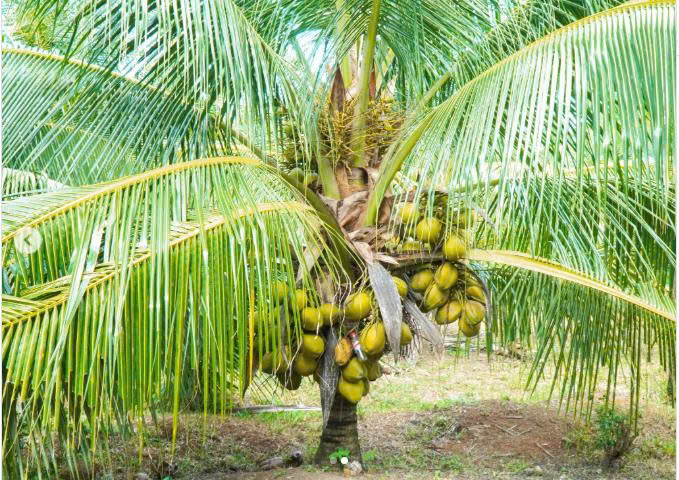
Laguna Tall coconuts (Source: Internet)
Indonesia market
Indonesia commonly uses Palembang coconut varieties, which are known for their large coconut meat yield and distinctive flavor. These coconuts are usually harvested at around 11–12 months to ensure optimal thickness and oil content for desiccated coconut production.
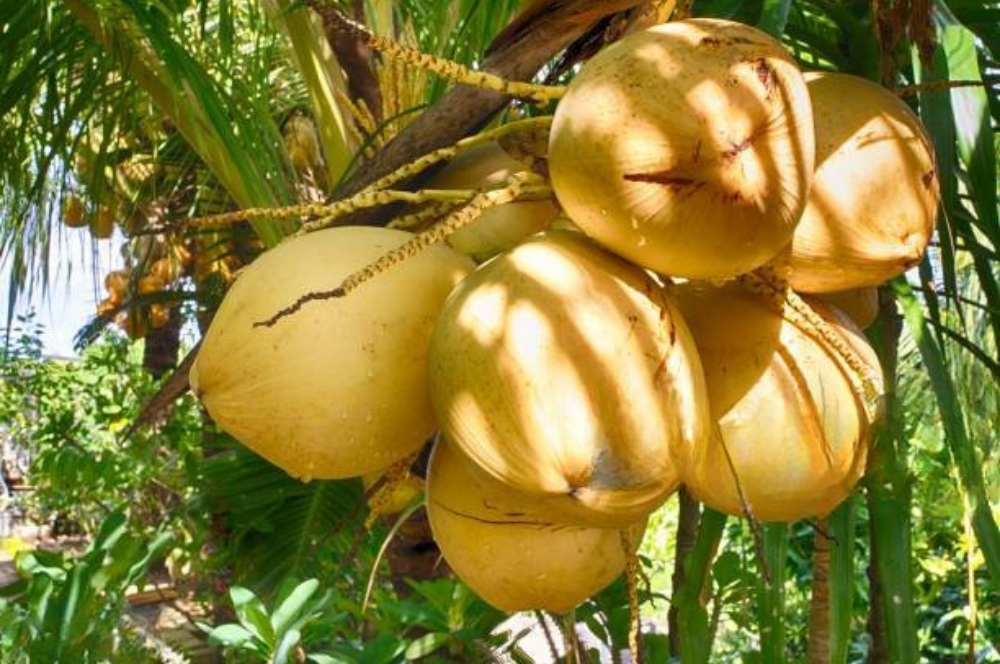
Palembang coconut (Source: Internet)
Raw material requirements for desiccated coconut production
Desiccated coconut is produced from mature coconut meat (10–12 months old) and must be processed within 48–72 hours after harvesting to maintain freshness and natural oil content. Raw materials are carefully selected, using only coconuts with naturally white, thick meat that is free from discoloration, pests, disease, or fungal contamination.
After extraction, the coconut meat is washed to remove impurities. It is then grated or shredded according to required sizes before being dried using fluidized-bed dryers or hot-air drying systems to produce desiccated coconut with natural white color and characteristic coconut aroma that meets export standards.
Types of desiccated coconut
Desiccated coconut is divided into different types based on particle size and shape to meet various needs in food production. Each type has different characteristics in terms of crispness, fat content, and applications, suitable for bakery, beverages, toppings, and processed foods.
Classification by particle size
Fine grade: fine desiccated coconut has the smallest particle size among all types. It is produced from mature coconut meat that is finely grated and dried to low moisture content. Most particles range from about 1.4–1.7 mm. Moisture content is controlled at ≤3% to maintain natural flavor and product quality.
Medium grade: medium grade desiccated coconut has larger particle sizes than fine grade, maintaining a more noticeable texture. This type is often used when a crunchy texture or visible coconut pieces are desired. Particle size ranges from 1–2.8 mm with moisture ≤3%.
Long shred / thread: this type consists of long strands that retain a texture similar to fresh coconut meat. The strands typically measure about 10–50 mm with moisture content around 3%.
Flakes: flake desiccated coconut consists of thin, flat slices that remain naturally crispy after drying. Their white color, rich flavor, and appealing appearance make them valuable ingredients in the food industry. Typical thickness is around 0.8–1 mm with moisture ≤3%.
Chips: coconut chips are larger pieces compared with flakes and usually have higher thickness and crunchiness. They preserve the natural coconut flavor and richness. Size ranges from about 1–50 mm with moisture ≤3%.
Classification by fat content
1. High fat
Fine grade: high-fat fine coconut retains strong coconut aroma and good binding properties, making it suitable for products requiring smooth and cohesive textures. Standard fat content ≥60%.
Medium grade: this type provides a balance between crisp texture and rich flavor. Standard fat content ≥60%.
Long shred: long strands with high fat content create attractive texture and strong coconut flavor. Standard fat content ≥60%.
Flakes: thin flakes with rich fat content easily distribute coconut flavor in food products. Standard fat content ≥60%.
Chips: larger pieces maintain strong natural coconut flavor and create crunchy texture in finished products. Standard fat content ≥60%.
2. Medium fat
Fine grade: medium-fat fine coconut provides lighter texture while still maintaining coconut aroma. Standard fat content usually ranges from 40–50%.
3. Low fat
Fine grade: low-fat desiccated coconut reduces calorie content while maintaining natural structure, making it suitable for healthier food formulations. Fat content usually ranges from 20–25%.
Production process of desiccated coconut
The standard production process usually includes the following steps:
-
Raw material selection: selecting mature coconuts aged 10–12 months with thick white meat
-
Dehusking and splitting: removing the husk and shell to extract coconut meat
-
Paring: removing the brown skin layer to maintain the natural white color
-
Washing: cleaning with filtered water to remove impurities
-
Grinding or shredding: coconut meat is processed into fine, medium, thread, flakes, or chips using coconut graters, grinders, or slicing machines
-
Drying: drying using fluidized-bed or hot-air systems to reduce moisture to around 2.5–3%
-
Sieving and grading: removing small fragments and classifying by particle size
-
Cooling: cooling the product and passing through a metal detector
-
Packaging: packing with moisture-proof packaging or vacuum sealing
-
Storage: storing in cool, dry conditions to maintain color and natural aroma
Applications of desiccated coconut
Desiccated coconut is not only a traditional food ingredient but also a versatile product widely used in many fields. With its naturally rich coconut flavor, light crisp texture, and long shelf life, desiccated coconut has become an important ingredient in both the food processing industry and everyday consumption.
In the food processing industry
Confectionery and bakery production
Desiccated coconut is widely used in confectionery products such as biscuits, sponge cakes, coconut candy, and coconut-coated chocolate. Thanks to its rich coconut aroma and light crunchy texture, it helps enhance the natural flavor and create an attractive finish on baked goods.
Many well-known Vietnamese brands such as Bibica and Kinh Do, as well as international brands like Nestlé and Ferrero, also use desiccated coconut in their products to enhance flavor and texture.
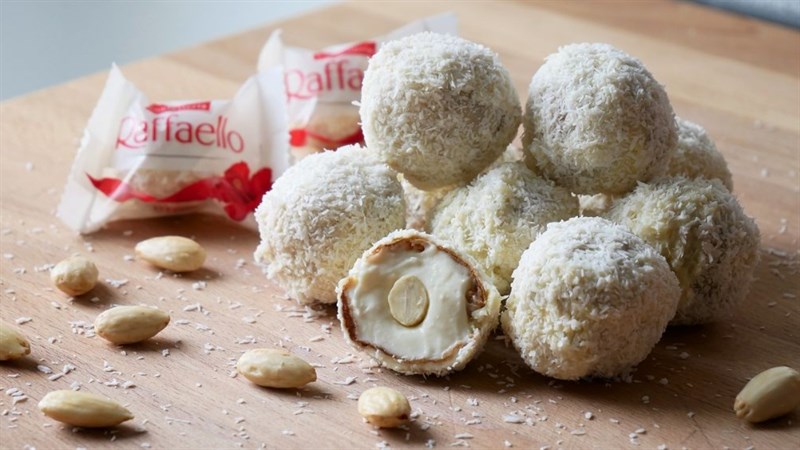
Ferrero chocolate candy (Illustration)
Ingredient for dairy and ice cream products
Manufacturers of yogurt, coconut milk beverages, coconut ice cream, and nutritional drinks often add desiccated coconut to increase richness and improve product texture. Some notable brands include Vinamilk (yogurt, coconut milk), TH True Milk (coconut milk), Kido’s Fami (coconut ice cream), and Nestlé (nutritional beverages).
Cereal and instant food processing
Flakes or chips forms of desiccated coconut are commonly used in granola, muesli, energy bars, and ready-to-eat foods because of their crisp texture, appealing white color, and ability to maintain structure when mixed with other ingredients. Some brands using these ingredients include Kellogg’s (granola, muesli), Nestlé Fitness, Nature Valley, and Bob’s Red Mill.
Ingredient in frozen foods and desserts
Desiccated coconut is also a popular topping for ice cream, frozen cakes, frozen fruits, or as a coating for dishes such as tempura or coconut shrimp because of its ability to remain crispy and provide a distinctive coconut flavor. Some dessert brands that use coconut ingredients include Häagen-Dazs, Ben & Jerry’s, Talenti Gelato, and Mochi Ice Cream.
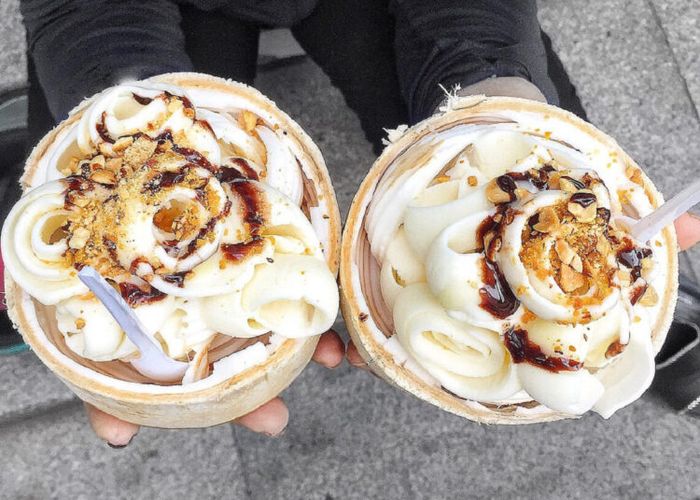
Ice cream (Illustration)
In everyday consumption
Desiccated coconut is commonly used by households to cook sweet soups, make cakes, blend smoothies, add toppings to yogurt, prepare coconut jam, or cook various dishes. With its natural richness and appealing aroma, it helps enhance desserts, fried foods, baked dishes, and even savory meals such as curry or sticky rice. It is a convenient ingredient that stores well and is easy to use in everyday cooking.
Export and import activities of desiccated coconut
The desiccated coconut import and export market is growing strongly, especially in the EU, the United States, and Asia, creating significant opportunities for Vietnamese companies to expand production and exports.
Overview of the global desiccated coconut market
The global desiccated coconut market has been growing steadily due to demand from the confectionery, beverage, and processed food industries, particularly in the United States, Europe, and the Middle East. The global trend toward healthier food consumption and the rapid development of the food and beverage industry have driven import demand, creating opportunities for tropical countries such as Vietnam.
In 2024, desiccated coconut prices increased significantly in major producing countries: the Philippines reached 2,315 USD per ton, Indonesia 3,200 USD per ton, and Sri Lanka 3,760 USD per ton, reflecting strong demand and increasing export potential.
Desiccated coconut import markets
In 2025, the EU27 and the United States showed different trends. The EU27 recorded a strong increase in import volume of 14.8%, rising from 80,272 tons to 92,192 tons. Meanwhile, the United States saw a 5.0% increase in import volume to 34,544 tons. These trends show that demand for desiccated coconut is recovering strongly in both markets, even though global supply faces certain challenges.
Other markets such as Japan, South Korea, Canada, Australia, and Middle Eastern countries are also importing desiccated coconut with increasing demand.
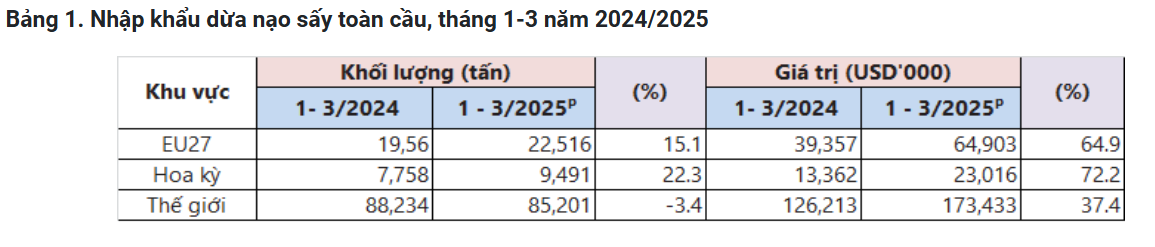
Leading exporting countries of desiccated coconut
The leading exporters of desiccated coconut include the Philippines, Indonesia, Sri Lanka, India, Vietnam, Malaysia, and Thailand. These countries stand out thanks to diverse coconut varieties, large coconut cultivation areas, modern processing technologies, and strong export networks that supply markets in Europe, the United States, the Middle East, and Asia.
In recent years, Vietnam has been considered one of the fastest-growing countries in coconut exports, supplying both raw materials and high-value coconut products.
Vietnamese companies supplying desiccated coconut
Betrimex is a long-established enterprise with coconut processing factories in Ben Tre. The company produces desiccated coconut that meets international standards such as HACCP, ISO, HALAL, KOSHER, and Organic certifications.
Coco Hitech Vietnam also operates a factory in Ben Tre and supplies a wide range of coconut products including desiccated coconut, exporting to many markets in Asia and Europe.
COMOON (COMOON Co., Ltd.) supplies a variety of coconut-based products including bottled coconut water, desiccated coconut, coconut oil, coconut fiber, and coconut handicrafts. The company is developing strategies to contribute to making the coconut industry one of the pillars of Vietnam’s green economy.
COMOON provides a diverse range of desiccated coconut products made from 100% mature fresh coconut meat, ensuring natural flavor and nutritional value are preserved. The products have the following characteristics:
-
Fat content: available in high, medium, and low levels depending on customer requirements
-
Shelf life: 12 months from the production date
-
Packaging: available in 15 kg, 25 kg, or 50 kg bags, or customized packaging upon request
-
Storage conditions: store in a dry place below 25°C and avoid direct sunlight
-
Applications: suitable for food and beverage production, commonly used as toppings, especially in bakery products such as cookies, snack bars, cakes, and other processed foods
COMOON selects coconuts aged 11–12 months from Ben Tre to produce desiccated coconut for both domestic markets and export to demanding markets such as Japan, South Korea, and Europe.
In addition, the company also supplies frozen coconut water concentrate, coconut powder, coconut oil, frozen coconut meat, and various other coconut-based products to meet the needs of industrial food production and premium consumer markets.
Share :
Customer comments
Other news
COMOON Co., Ltd.
58 Co Giang Street, Cau Ong Lanh Ward, District 1, Ho Chi Minh City, Vietnam
T: (+84) 366 053 666
- Business Registration No.: 0318171053
- Issued on November 17, 2023 by the Department of Planning and Investment of Ho Chi Minh City.

Copyright © 2024 COMOON


