




- Login
- Register


News
The latest updates from COMOON. Stay tuned to not miss any information!
WHY COCONUT MILK POWDER MATTERS IN MODERN FOOD MANUFACTURING
Wednesday, 15/04/2026, 02:47
Coconut milk powder has become a popular ingredient in the modern food manufacturing industry. For manufacturers, coconut milk powder fits the needs of industrial production thanks to its capacity for dry storage, easier transportation, more flexible formulation, and compatibility with premix systems.
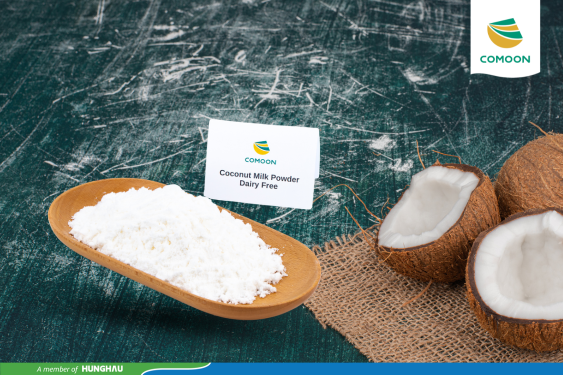
Main application groups for Coconut Milk Powder
Instant beverages and premixes
Coconut milk powder is widely used in premixed beverage blends because it easily dissolves in warm water, and its rich coconut flavor is much easier to transport than liquid coconut milk.
Sauces, soups, and seasoning systems
Technical documents indicate that coconut milk powder is applied in products such as soups, sauces, curries, and other culinary preparations. This ingredient is popular in seasoning and blending systems. Food manufacturers and processors using the fat content of coconut milk powder find it easier to store, weigh, and dose because it is in a dry powder form.
Bread, bakery, and confectionery
The bakery industry is one of the most suitable application groups for B2B customers. Data sheets from suppliers and processing documents both list cakes, biscuits, desserts, bakery products, and confectionery as applications utilizing coconut milk powder. In practice, coconut milk powder is an ingredient that helps recipe developers create coconut-flavored baked goods with a more convenient blending process.
Plant-based and dairy-alternative products
Coconut milk is considered a group of plant-based beverages/foods. Coconut milk powder is a dry powder ingredient that replaces liquid dairy products to increase convenience, ease of storage, and suitability for industrial processing.

How Coconut Milk Powder supports industrial formulation
Better control of solids and fat
A major advantage of powdered ingredients is the ability to control the formula. Coconut milk powder allows manufacturers to dose more accurately than liquid ingredients, which are prone to variations during handling. Product guidelines even note that the concentration of coconut milk can be adjusted for each formula by changing the powder-to-water ratio, which is particularly suitable for formula development in industrial production.
Batch-to-batch consistency
Coconut milk powder is primarily used because it creates a standardized ingredient format that can be stored, reconstituted, and applied more uniformly. Studies on coconut milk powder show it can be reconstituted into a homogeneous solution, thereby supporting the uniformity of production batches according to a common formula ratio.
Easier storage, handling, and dry blending
Compared to liquid coconut milk, the powder form requires less storage space, is easier to handle, and is suitable for dry blending systems and machinery. Technical documents describe coconut milk powder as an ingredient form that can be stably stored and is suitable for dry applications, confectionery items, and recipes that require coconut milk. Consequently, coconut milk powder becomes a natural choice for premix systems and production lines based on powdered ingredients.
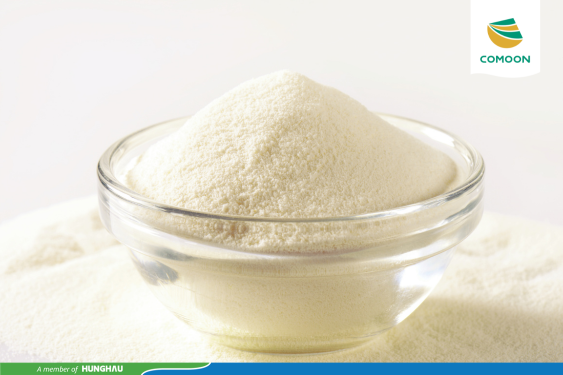
Functional benefits in processing and product development
Texture and mouthfeel
Coconut milk powder creates a smooth texture and adds coconut fat. Product information from foodservice and ingredient suppliers always emphasizes its rich, smooth characteristics and texture, which is why it is often used in desserts, sauces, beverages, and baked goods.
Flavor stability
Spray drying technology is used partly because it helps create a more stable ingredient format. Recent technical documents note that spray drying can support solubility and reduce flavor loss. Technical data sheets emphasize that coconut milk powder retains the characteristic flavor and aroma of coconut.
Compatibility with premix systems and scale-up
Because coconut milk powder is a dry ingredient, it is easier to integrate into premix systems, seasoning systems, powder blending for the bakery industry, and large-scale production formulas. Manufacturers expanding production note that dry ingredients are generally easier to dose, blend, transport internally, and standardize across factories.
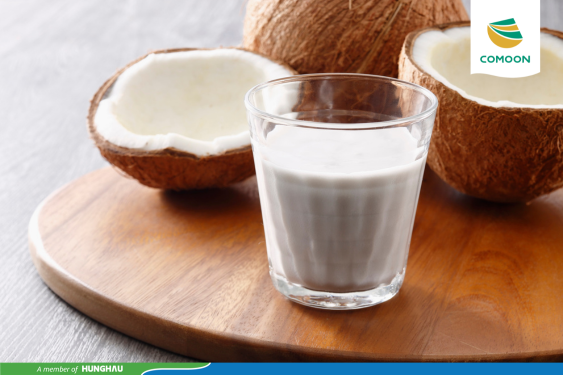
Coconut Milk Powder vs. Liquid Coconut Milk
| Comparison area | Coconut Milk Powder | Liquid Coconut Milk |
| Storage & shelf life | Longer shelf life, easier to store in dry conditions | Shorter shelf life, more sensitive in storage |
| Transport & handling | Lighter, more compact, easier to handle and ship | Heavier, bulkier, less convenient in logistics |
| Formula control | Easier to adjust solids, fat level, and concentration in production | Less flexible once the liquid format is fixed |
| Production efficiency | Works well in dry blending systems, premixes, and scale-up manufacturing | More suitable for direct liquid applications, but less efficient in dry systems |
What food manufacturers should look for in a Coconut Milk Powder supplier
Stable raw material and finished-product quality
Manufacturers seek a supplier that can provide a stable source of coconut raw materials, consistent finished product specifications, and reliable sensory characteristics. With powdered ingredients, minor differences in fat content, moisture, aroma, or solubility can affect the quality of the finished product.
Documentation and quality assurance
A serious supplier must be ready to provide technical specification sheets, microbiological standards, allergen information, packaging details, and shelf life guidelines. These are the basic requirements to qualify for B2B operations and export readiness.
Scalable production capability
The supplier also needs to have the capability to scale up. Food manufacturers do not just buy ingredients; they buy uniformity, continuity, and consistency. They need a reliable supply in terms of output, regular repeatability in production, and the ability to provide long-term support across multiple markets.
Cost competitiveness
Pricing is an important factor, especially for the bakery industry, premixes, and large-scale food production. However, the best commercial choice is not simply the lowest price. It is a supplier that knows how to balance price, stability, technical support, and the capacity for transportation and customs clearance.
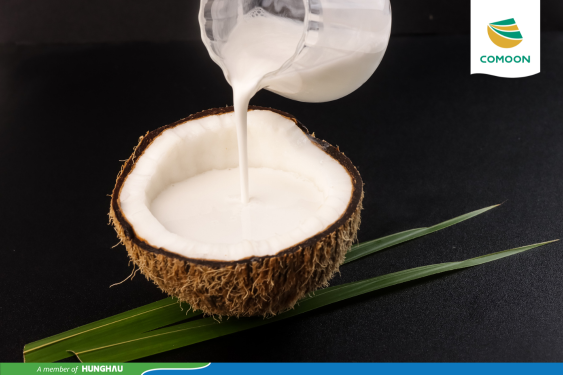
Why choose COMOON Co., Ltd.?
COMOON coconut milk powder is produced from fresh coconut meat. The coconut milk is extracted, pasteurized at high temperatures, and then rapidly cooled to help preserve quality and flavor. The product is manufactured on a closed production line with strict control over moisture and other quality indicators.
COMOON coconut milk powder is suitable for many food application groups, including beverages, baked goods, confectionery, sauces, soups, and plant-based products. The flexible fat content allows manufacturers to choose the specifications that best suit their formulation goals.
As a dry ingredient, the product is easier to store, handle, and integrate into dry blending systems compared to liquid options. The product is also available in customizable packaging specifications, helping customers adjust their procurement plans according to varying production scales and market requirements.
| Item | Details |
| Product name | Coconut Milk Powder |
| Product type | Dry product |
| Color | Milky white |
| Raw material | 100% fresh coconut meat |
| Dairy-free | Yes |
| Fat content | 40%–65%, customizable upon request |
| Shelf life | 24 months |
| Storage temperature | Below 25°C |
| Storage conditions | Store in a cool, dry place, away from direct sunlight |
| Packaging | 1 kg, 5 kg, 10 kg, 25 kg, customizable |
| Transportation | Sea freight or air freight |
| Origin | Vietnam |
| pH | 5.9 – 6.2 |
| Fat | ≥ 30% |
| Protein | ≥ 3.0% |
| Total Sugar (Brix) | ≥ 12% |
| Total Aerobic Plate Count | ≤ 5.0 × 10⁴ |
| Coliforms | ≤ 100 |
| E. coli | ≤ 100 |
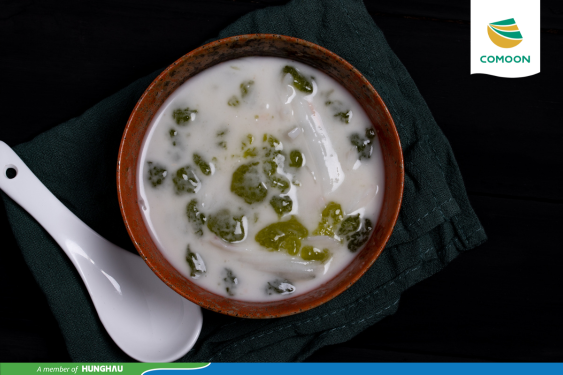
COMOON Co., Ltd. is a member of HungHau Foods, with over 40 years of experience in agricultural processing and export in both domestic and international markets. This foundation gives the company a better advantage in sourcing, quality management, and international trade support. The factory and products meet international standards, including BRCGS, FSSC 22000, SGS, HALAL, and FDA. This is an important advantage for customers who need a supplier with export readiness and a clear quality documentation system.
Additionally, COMOON Co., Ltd. focuses on a stable supply, uniform product quality, and competitive pricing for B2B customers. The company is also ready to provide test samples and detailed technical documentation to facilitate evaluation and testing, helping manufacturers feel more confident when transitioning from the product assessment stage to commercial production.
For more information about COMOON coconut milk powder, sample requests, or technical documents, please contact:
COMOON Co., Ltd.
Phone: +84 366 053 666
Email: info@comoon.vn
Share :
Customer comments
Other news
COMOON Co., Ltd.
58 Co Giang Street, Cau Ong Lanh Ward, District 1, Ho Chi Minh City, Vietnam
T: (+84) 366 053 666
- Business Registration No.: 0318171053
- Issued on November 17, 2023 by the Department of Planning and Investment of Ho Chi Minh City.

Copyright © 2024 COMOON


