




- Login
- Register


News
The latest updates from COMOON. Stay tuned to not miss any information!
THE SWEETNESS OF VIETNAMESE COCONUTS AND THEIR ROLE IN EXPORT PROCESSING
Tuesday, 24/02/2026, 06:57
Within the tropical agricultural ecosystem, Vietnamese coconuts are highly valued for their stable production output. In addition, the natural sweetness of Vietnamese coconuts is a critical factor that differentiates them from coconuts grown in many other producing countries, creating a competitive advantage in processing and export markets.
What Is Coconut Sweetness?
Concept of Sweetness in Coconut Water
Coconut sweetness refers to the level of total soluble solids present in coconut water, primarily derived from natural sugars such as glucose, fructose, and sucrose.
In food processing and export industries, sweetness is quantified using standardized scientific indicators to ensure consistent raw material quality.
Coconut sweetness is measured using the Brix index (°Bx), a widely accepted scale for determining total soluble solids in a liquid solution. The Brix value reflects the percentage by mass of dissolved solids, primarily natural sugars, along with organic acids, vitamins, minerals, and other soluble compounds.
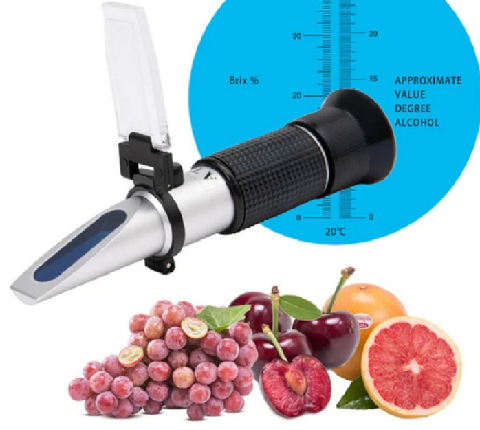
Brix Refractometer for Measuring Sweetness (Source: Internet)
According to the formula, 1°Bx corresponds to 1 percent soluble solids in 100 grams of solution at 20°C. For example, coconut water with a Brix level of 10°Bx contains approximately 10 grams of dissolved solids and 90 grams of water per 100 grams.
Natural Sweetness vs. Artificial Sweetness
Natural sweetness develops throughout the coconut’s growth cycle. Through photosynthesis, the coconut tree synthesizes and accumulates natural sugars in its trunk, leaves, and fruit. The healthier and more efficient the photosynthetic process, the higher the natural sugar concentration in the fruit, which is reflected in a higher Brix index.
Artificial sweetness refers to sweetness adjusted during processing by adding sugar or sweeteners. This is typically done to standardize flavor profiles when raw materials have low Brix values or when industrial-scale production requires consistent taste characteristics for specific markets.
The Role of Sweetness in Coconut Quality Assessment
Sweetness is the primary factor influencing consumer sensory perception. Measuring Brix levels standardizes raw material evaluation and serves as a baseline criterion for selecting coconuts for processing.
Both low and high sweetness levels directly impact whether additional sugar is required. High natural sweetness reduces the need for added sugar or flavor adjustment during processing, lowering production costs while improving compliance with food safety regulations and sustainable consumption trends in export markets.
Factors Affecting the Sweetness of Vietnamese Coconuts
Coconut Variety
Each coconut variety exhibits different Brix ranges and characteristics. Some varieties are preferred for fresh consumption due to their mild sweetness, while others are more suitable for processing due to higher and more stable soluble solid content. However, variety determines the sweetness potential, not the final outcome alone.
|
Coconut variety |
Estimated Brix (%) |
|
Siamese Green Coconut |
7 - 7,5% |
|
Siamese Red Coconut |
7 - 7,5% |
|
Green Siamese coconut with nipple |
8 - 9% |
|
Brown Coconut, Red Dwarf Coconut |
8 - 9% |
|
Aromatic Coconut |
7 - 7,5% |
|
Tam Quan Coconut |
7 - 8% |
Comparison Table of Brix Levels of Popular Coconut Varieties in Vietnam
Soil and Natural Conditions
Soil characteristics, water sources, and climate conditions directly influence photosynthetic efficiency, mineral absorption, and sugar accumulation in coconut water.
Soil
Soil quality affects the coconut tree’s ability to absorb nutrients and water, influencing total soluble solids. Mineral rich, well drained, and aerated soils promote healthy root development and efficient sugar accumulation.

Ben Tre Garden (Source: Internet)
In Vietnam, coconut growing regions such as Ben Tre are highly regarded for mineral rich alluvial soils that contribute to stable Brix levels and distinct aftertaste, suitable for both fresh consumption and export processing.
Water Source
Water supply maintains mineral balance and sugar transport within the fruit. Stable irrigation supports metabolic processes and consistent sugar accumulation.
Prolonged drought or waterlogging can disrupt growth, reduce dissolved sugar content, and lead to lower or inconsistent sweetness.
Climate
Temperature and sunlight intensity directly affect photosynthesis. A stable tropical climate with abundant sunshine and humidity enhances natural sugar synthesis.
Extreme weather conditions, including prolonged rainfall or severe drought, may cause fluctuations in Brix levels between harvest cycles.
Fruit Maturity
Fruit age is one of the most critical determinants of coconut sweetness.
Young coconuts typically contain clear water with mild sweetness. During the mid-maturity stage, sugar content increases, producing a more pronounced yet balanced sweetness. In mature coconuts, water volume decreases, and sugars are converted into coconut meat, resulting in reduced sweetness in the liquid.

Coconut Maturity Affects Sweetness (Source: Internet)
Accurate harvest timing ensures optimal natural sweetness and stable Brix levels, particularly for ready-to-drink coconut water production and export processing.
Cultivation and Harvesting Practices
Cultivation methods and harvest timing play a decisive role in forming and maintaining the natural sweetness of coconut water. In practice, how coconut trees are managed throughout their growth cycle directly influences photosynthetic efficiency, carbohydrate accumulation, and ultimately the Brix level.
Traditional coconut farming is largely based on farmers’ experience, with limited control over nutrient management, irrigation systems, and soil conditions. In many cases, uneven fertilization or inconsistent irrigation across seasons may result in unstable photosynthesis, fluctuating sugar accumulation in coconut water, and inconsistent sweetness between harvest batches.
Organic coconut production follows a cultivation system free from chemical fertilizers, synthetic pesticides, and herbicides. This approach emphasizes the use of organic fertilizers, biological pest control, and sustainable farm management practices. The production model includes natural cultivation methods, compliance with international certifications such as those of the United States, Japan, and the
European Union, and, in some cases, integrated aquaculture systems such as shrimp farming to enhance overall farm value and sustainability.
Harvest Timing Directly Affects Coconut Water Sweetness
If cultivation practices establish the foundation of quality, harvest timing is the determining factor affecting both sensory attributes and the sweetness of coconut water.
Harvesting too early means the fruit has not accumulated sufficient sugars, resulting in diluted and less flavorful coconut water.
Harvesting too late reduces soluble sugar levels as metabolic energy shifts toward coconut meat development, leading to decreased sweetness in the water.
According to standardized cultivation protocols, accurately determining the appropriate fruit maturity for each coconut variety and intended application is essential.
For drinking coconuts, fruits are typically harvested at the stage when coconut water reaches its peak natural sweetness. COMOON fresh coconut water is sourced from carefully selected coconuts harvested at optimal maturity to ensure the highest level of natural sweetness.
Sweetness of Vietnamese Coconut in Processing and Export
The Role of Sweetness in Coconut Water Products
In coconut water processing and export, the natural sweetness of Vietnamese coconuts directly influences product formulation, including whether sugar or sweeteners are added, and determines market positioning, such as “clean label” or “no added sugar” claims in international markets.
Sweetness Requirements for Bottled Coconut Water
In the bottled coconut water industry, natural sweetness is a critical criterion for evaluating raw material quality. Global markets increasingly favor products without added sugar; therefore, coconut water with stable natural sweetness helps minimize processing interventions.
A balanced sweetness level also enables coconut water to retain its characteristic flavor profile after sterilization and storage processes, ensuring food safety compliance while maintaining sensory quality.
To ensure batch consistency, incoming raw materials must undergo strict Brix testing. During bottled coconut water production, manufacturers accurately measure sweetness from the raw material reception stage.
Through rigorous Brix control and high-quality sourcing, COMOON bottled coconut water, extracted from Ben Tre coconuts in Vietnam, preserves its natural sweetness and low calorie content, making it suitable for consumers who follow calorie-restricted diets, fitness programs, or healthy lifestyles.
With a long-term sustainability strategy, COMOON Co., Ltd. focuses not only on flavor but also on product uniformity and natural integrity. This commitment forms a strong foundation for export expansion and enhances the global value of Vietnamese coconuts.
Sweetness in Frozen Coconut Products
Depending on the processing format, such as frozen coconut water, coconut water concentrate, or frozen coconut water concentrate, Brix requirements vary to meet different applications and target markets.
Frozen coconut water typically maintains a Brix level of 5 to 6 degrees, closely preserving the original characteristics of fresh coconut water. It is suitable for reconstitution plants, beverage manufacturing, and food ingredient applications.
Frozen coconut water concentrate generally ranges from 22 to 60 degrees Brix. With higher soluble solids content, it reduces transportation and storage costs, making it ideal for export, large-scale beverage production, and formulation bases.
Currently, COMOON Co., Ltd. supplies both frozen coconut water and frozen coconut water concentrate for export. Product samples and technical specifications are available upon request for potential partners.
Why Sweetness Is a Critical Criterion in Vietnamese Coconut Exports
Within the coconut export value chain, sweetness is no longer merely a sensory attribute. It has become a core technical parameter that can be measured, controlled, and standardized. This indicator directly relates to import compliance, natural product positioning, and value-added processing potential, all of which determine the competitiveness and export value of Vietnamese coconuts in international markets.
Sweetness as a Measurable Technical Parameter Rather Than a Sensory Perception
In agricultural exports, particularly coconut water and coconut-derived products, subjective taste evaluation is insufficient. Sweetness is standardized through the Brix index, which represents the total soluble solids content in coconut water, including natural sugars, minerals, and soluble organic compounds.
Using the Brix index standardizes quality assessment among exporters, importers, and inspection authorities, reducing reliance on subjective sensory evaluation and creating a common technical language in international trade.
As a result, sweetness becomes a transparent and verifiable parameter that can be benchmarked across raw material regions and exporting countries.
Sweetness and Import Standards
In major export markets such as the European Union, the United States, Japan, and the Middle East, the Brix level is one of the key criteria for evaluating fresh coconut water, bottled coconut water, and coconut water concentrate.
A Brix level that is too low may indicate inferior sensory quality and result in product rejection. Abnormal Brix values may also raise concerns regarding the addition of sugar or artificial sweeteners.
Therefore, maintaining consistent Brix levels across shipments is essential to overcoming technical trade barriers, ensuring product uniformity, and sustaining importer confidence.
Share :
Customer comments
Other news
COMOON Co., Ltd.
58 Co Giang Street, Cau Ong Lanh Ward, District 1, Ho Chi Minh City, Vietnam
T: (+84) 366 053 666
- Business Registration No.: 0318171053
- Issued on November 17, 2023 by the Department of Planning and Investment of Ho Chi Minh City.

Copyright © 2024 COMOON


